Blog Archives

Galapagos – Isabella Island: the last chapter
Nellie, our new guide, awaits us at the dock in Isabella after a 2-hour speed boat transfer from Santa Cruz at 7am.
We then begin our tour to the breeding centre and the wetlands.
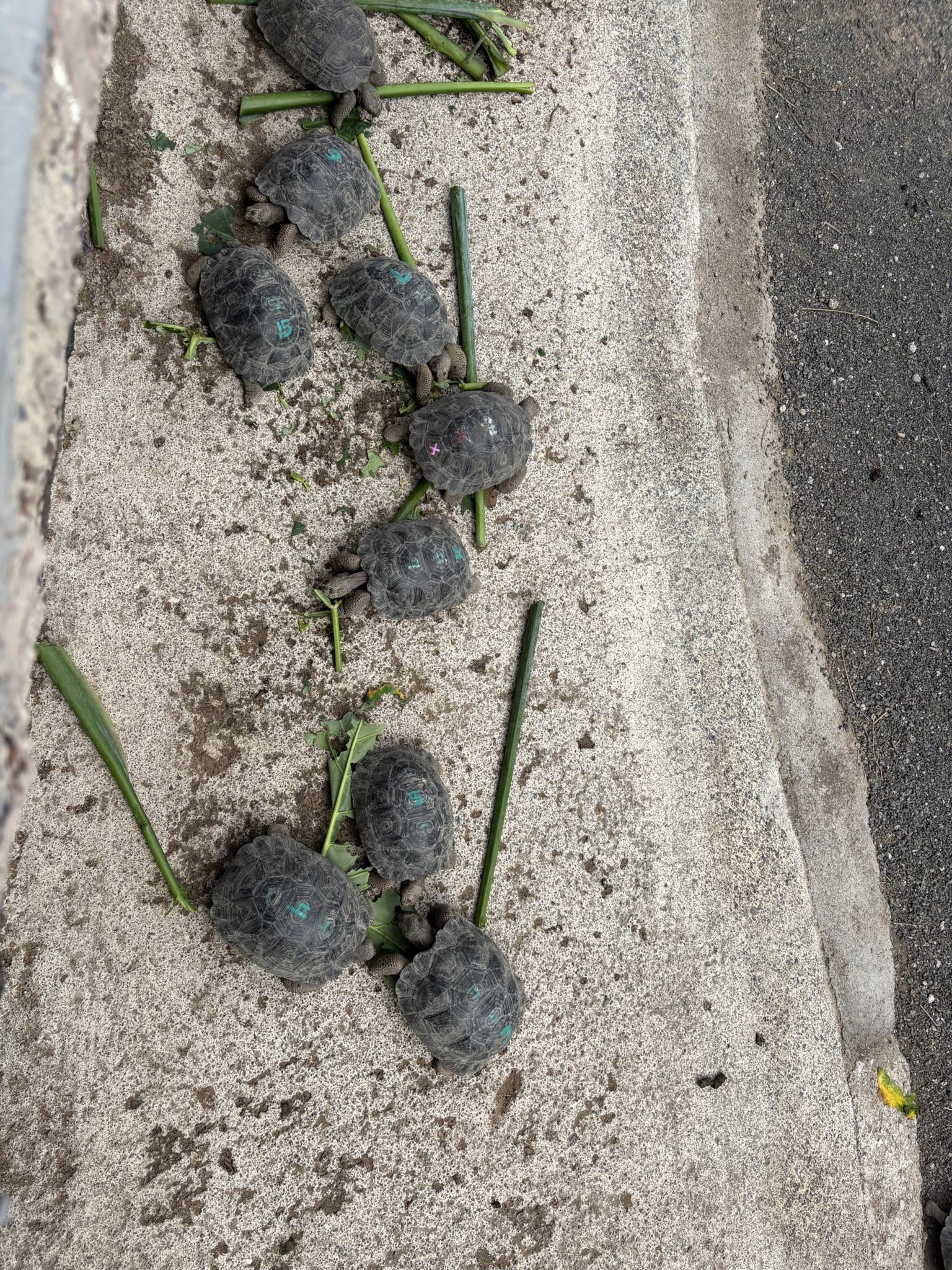
Even though we have been to several tortoise centre, we still continue to learn more.
For example, tortoise are at their most sexually active after 100 years old. Here they are only looking after tortoise endemic to Isabella. They have been breeding for 85 years and are seeing success with many sub-species where young ones over 5 years old have been reintroduced. We observe the last 10 remaining survivor of a sub-species that had adapted to the dry area of the Cerro azul volcano. Where their shell reshaped from being a dome shell where the neck can not extend to the flat shell that allows the neck to extend up to feed on branches rather than from the ground.
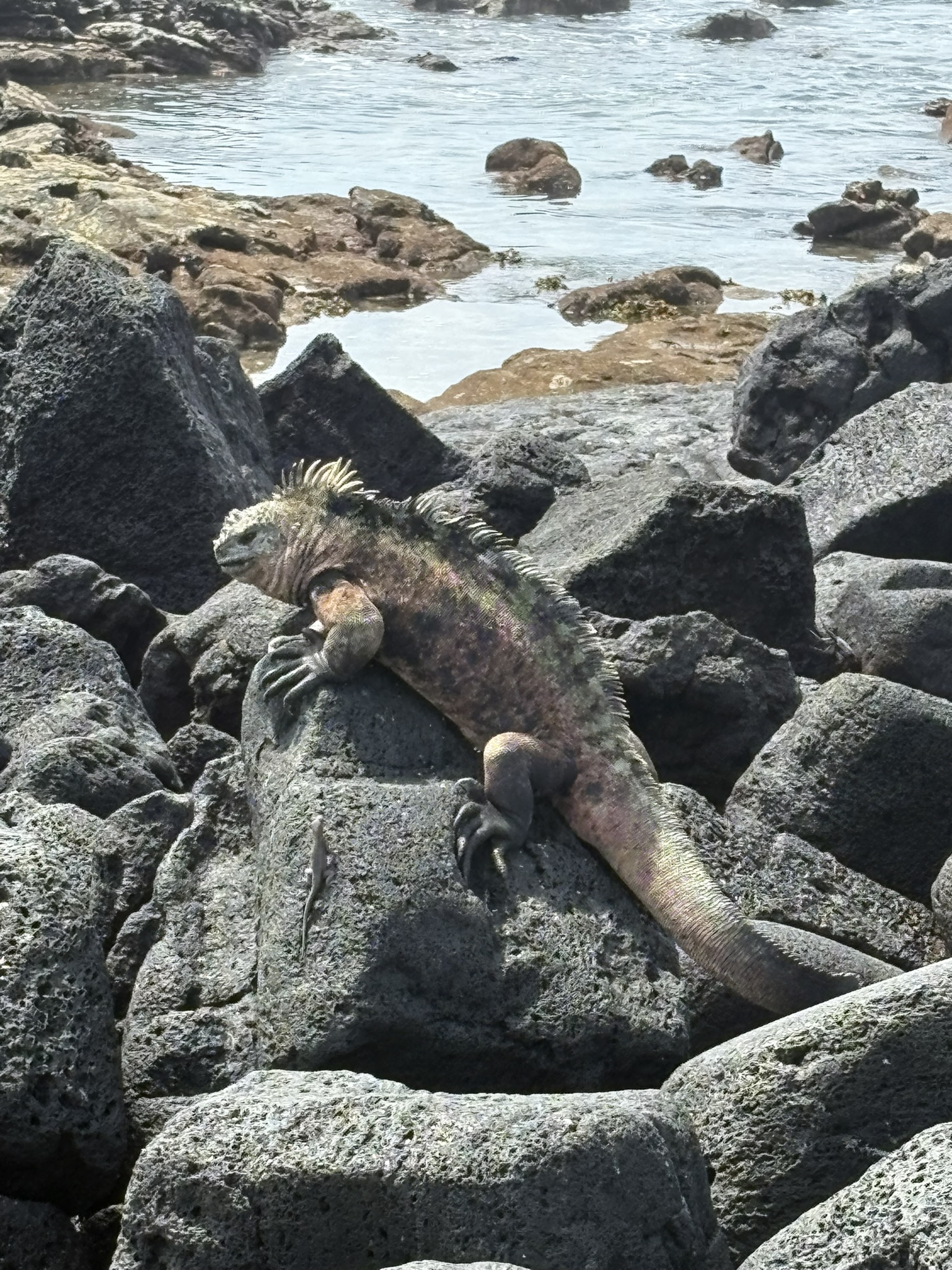
Over at the wetlands, we learn that marine iguana are like sea turtle in that they make a nest on the beach and lay their 2-4 eggs there. Once hatched the baby will race for the water.
The female mate and lay eggs only once a year but the male can mate again so we see many males showing off trying to attract the female with their bright color as they stake their spot on a rock. They have to wait for the female to come to them but once they are close, they will bite their necks and wrap their tail around them in what is referred to as a violent mating.
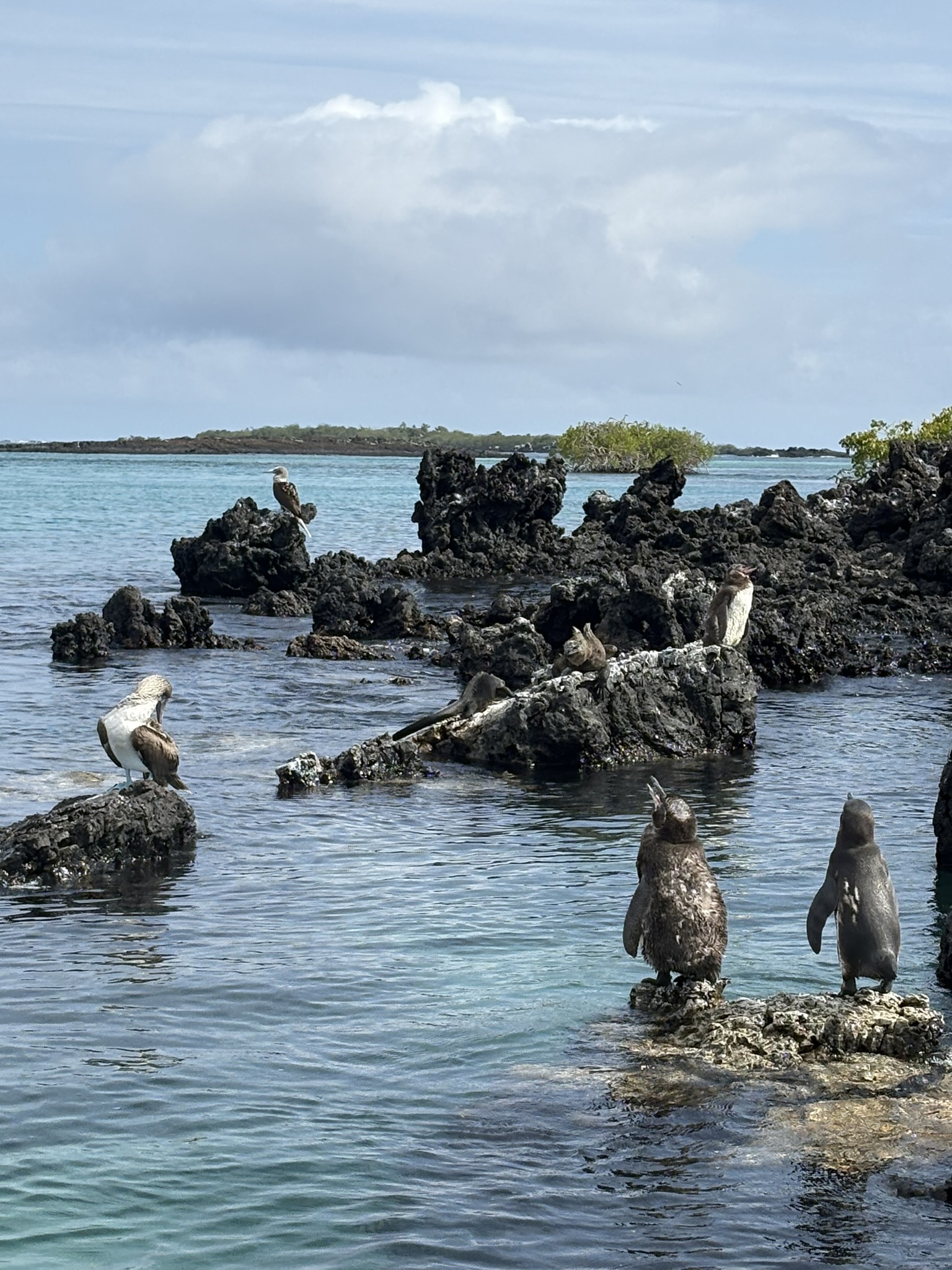
Along the way, we pass by rocks where multiple species are hanging out together – penguins, blue-footed boobies, pelicans and more.
A couple a bright yellow warbler.

Our hotel is right on this beautiful beach! During our tour, we meet a couple from Belleville and the wife is a professor in the faculty of education at Queens. She came here with 4 of her post grads at the university of Ecuador. She tells me that they are so far ahead of the Canadian university in this field. All teacher candidates must learn sign language, do intensive training in special education (in Canada, they are lucky if they get 2-weeks to learn how to look after autumn, adhd etc…). They also learn a minimum of 3 languages as all the natives languages here are recognized and taught in local villages. We could have chatted for hours!

Today we had a lazy morning as our tour only started at 11. I finally realized that we can rent go pro so I make my way to the store to do that. I’m excited!! We then find a nice spot on the beach to have coffee and enjoy the beautiful beach and view.
I climb up the viewpoint and am startled with a large male iguana not happy to see me! The view is worth it though.
The first stop on our tour are what is simply referred to as the tunnels. It was hard to imagine what they meant when they referred to above ground tunnels but that is what they are. This is the most unusual landscape we have ever seen. Tunnels of lava as far as the eyes can see – very beautiful!
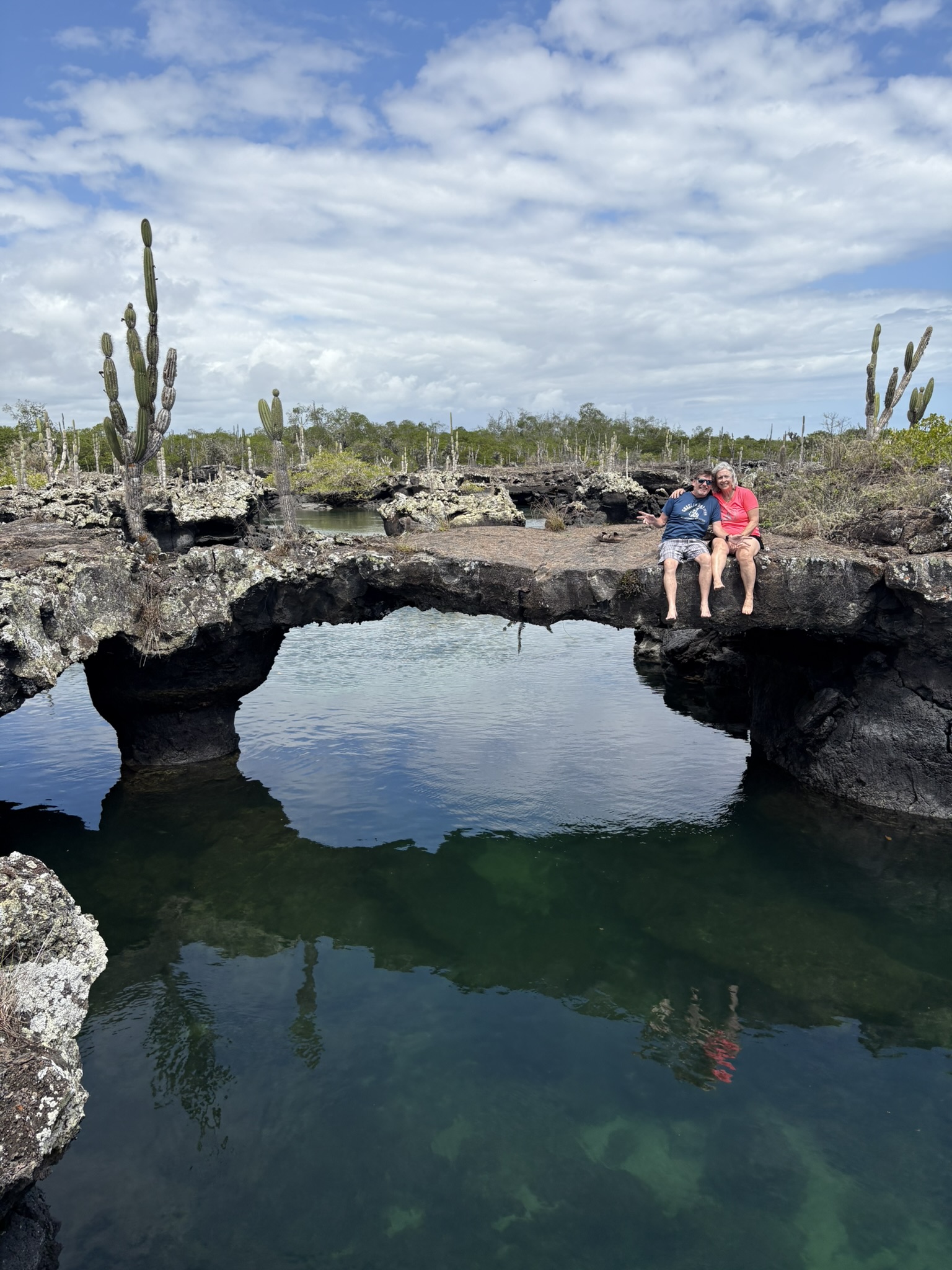
There are no iguana here as there is nowhere to lay their eggs but plenty of lobsters which is where most local fisherman come. There is hope that the area will be closed to fisheries in the next few years to maintain the ecosystem.
There is a blue footed booby nest with one chick of about 4 months old. They usually only have a maximum of 3 eggs and often time the first chick to hatch will throw the other eggs down the nest so only one survives. They can not fly until 6 months old so we are able to take a picture with it.
Our guide is Darwin and he is really great. He knows all the great spots for pictures !

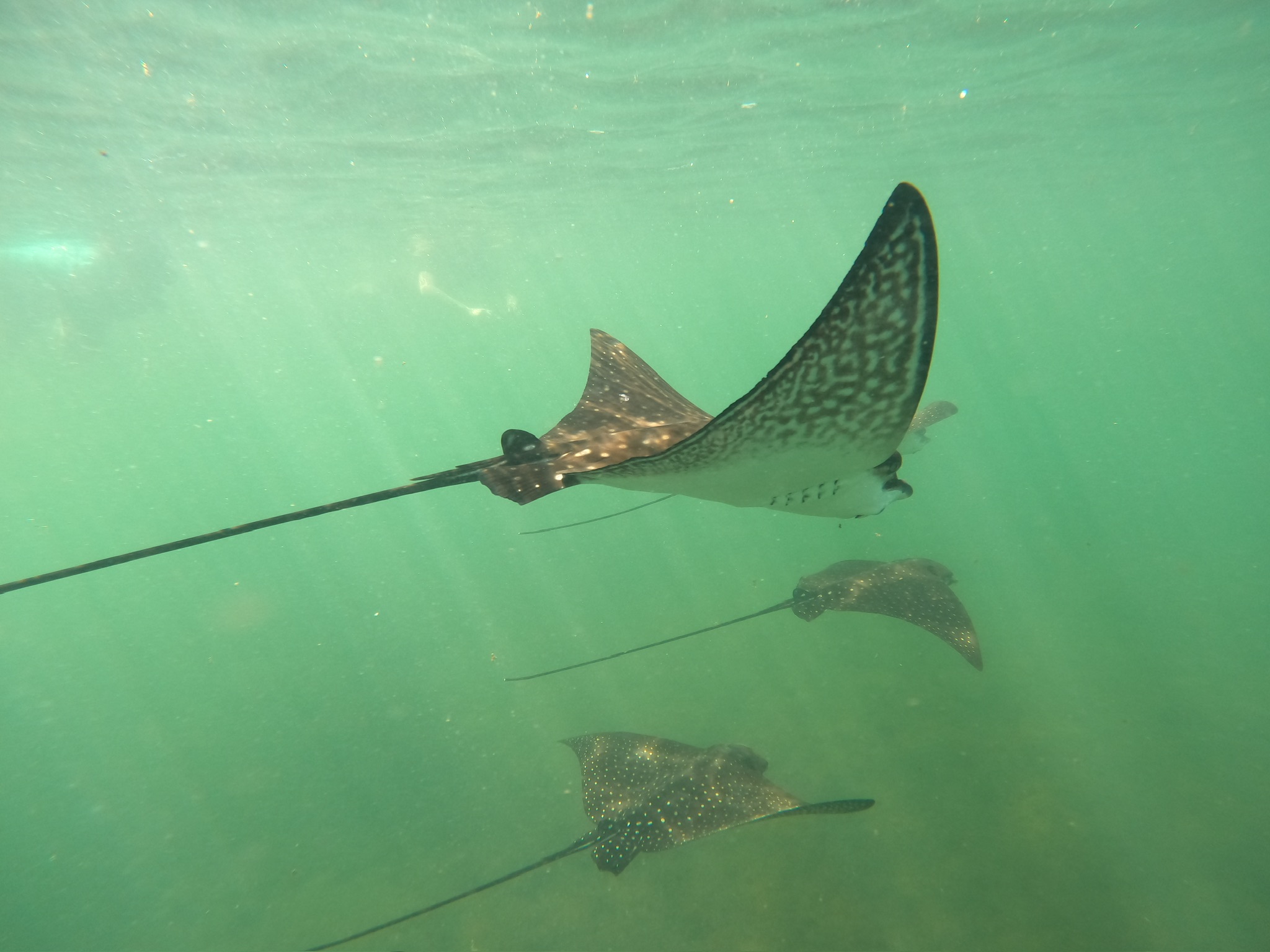
Afterwards, the boat takes us to another area along the cost of Isabella for snorkeling. There are giant manta ray swimming right by the boat!
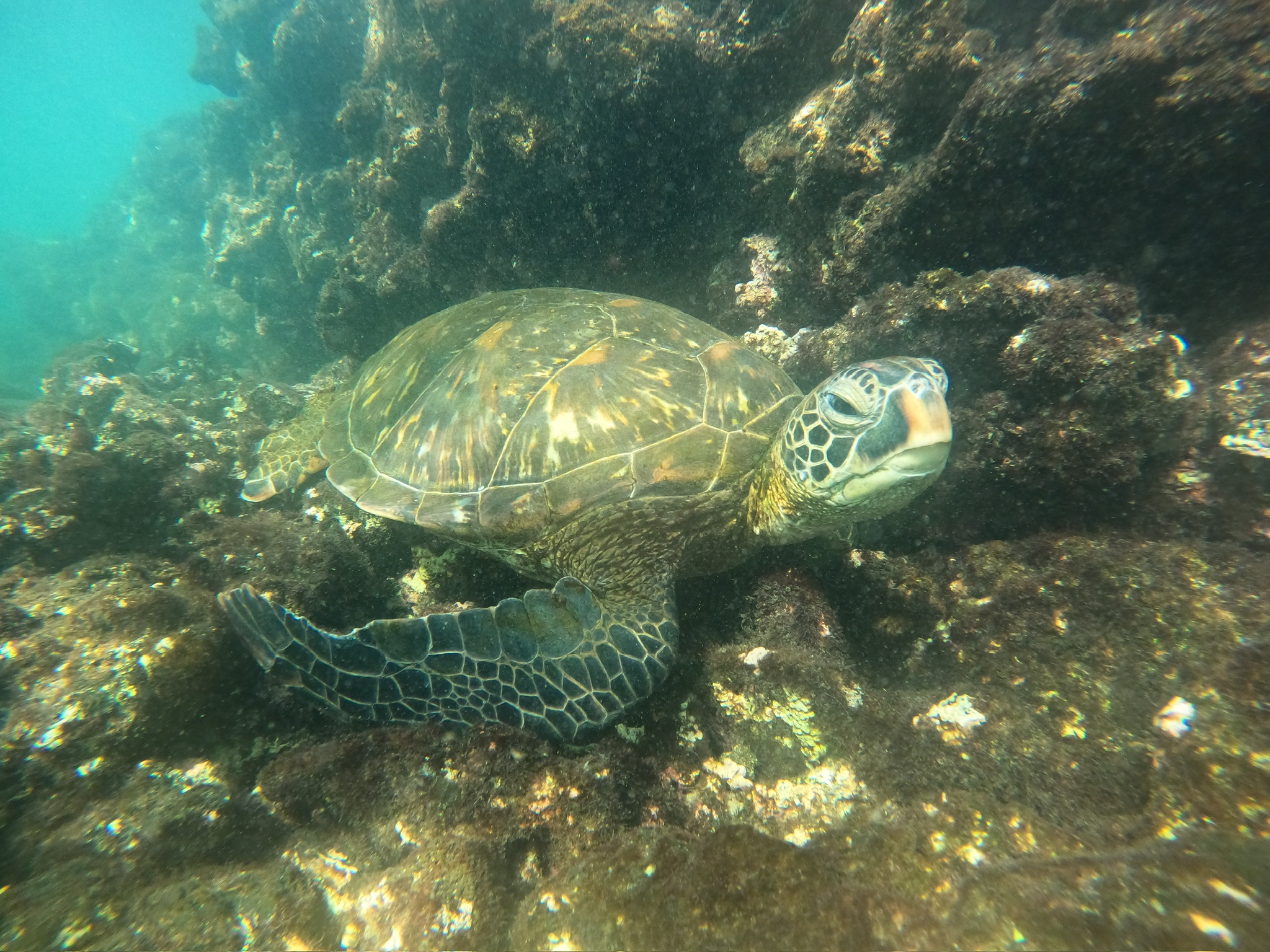
Darwin, our guide has an underwater camera as well and is determine that we are as many different types of sea animals as possible. We see sharks again, groups of stingrays, large turtles and then he takes us amongst the roots of the mangroves in search of the SEAHORSES. We finally find a few and it is truly magical to see these small animals hanging in the roots of the mangroves with their tails curled. When scared, they extend themselves and look just like a piece of stick! It is very cool!


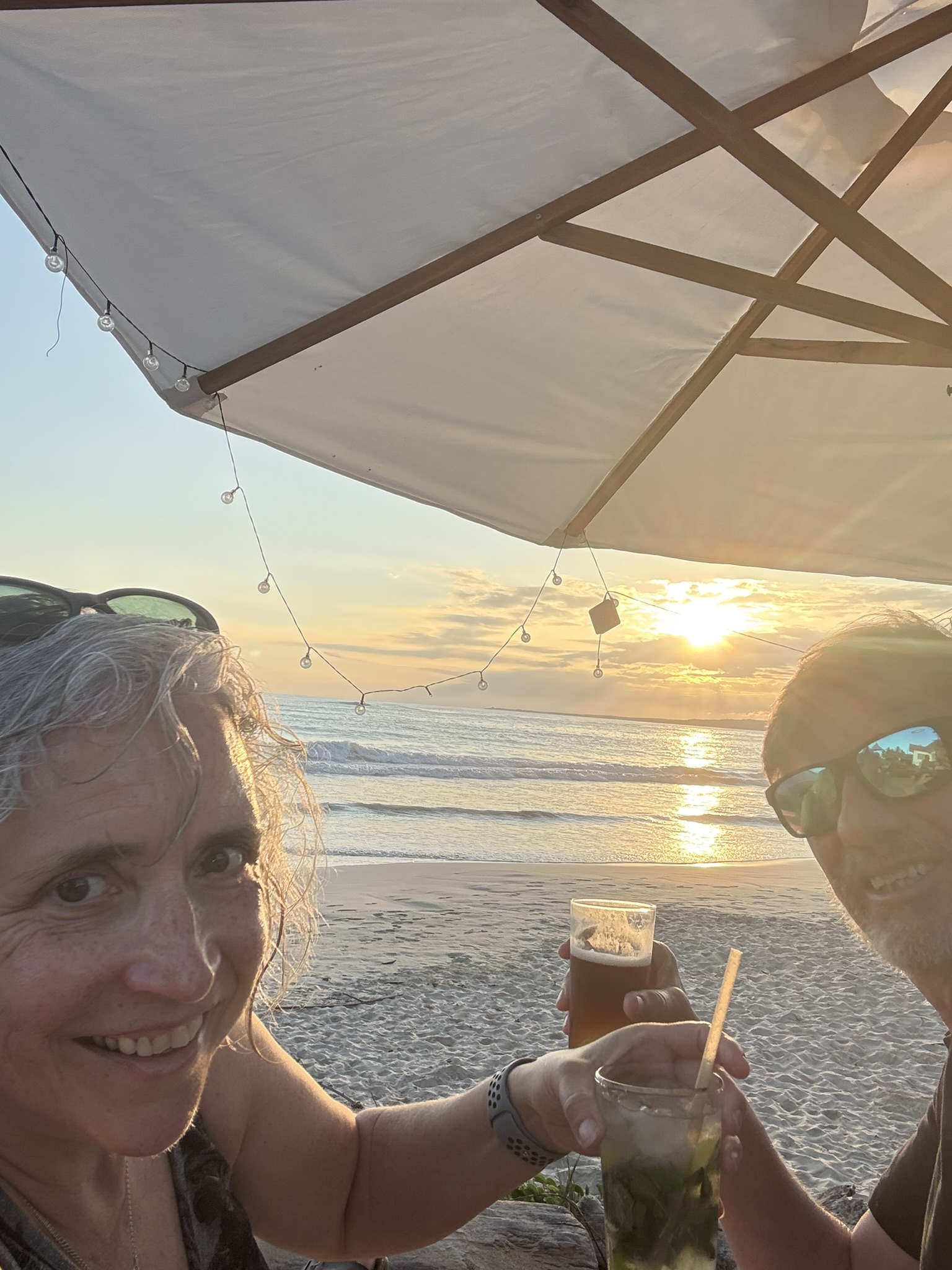
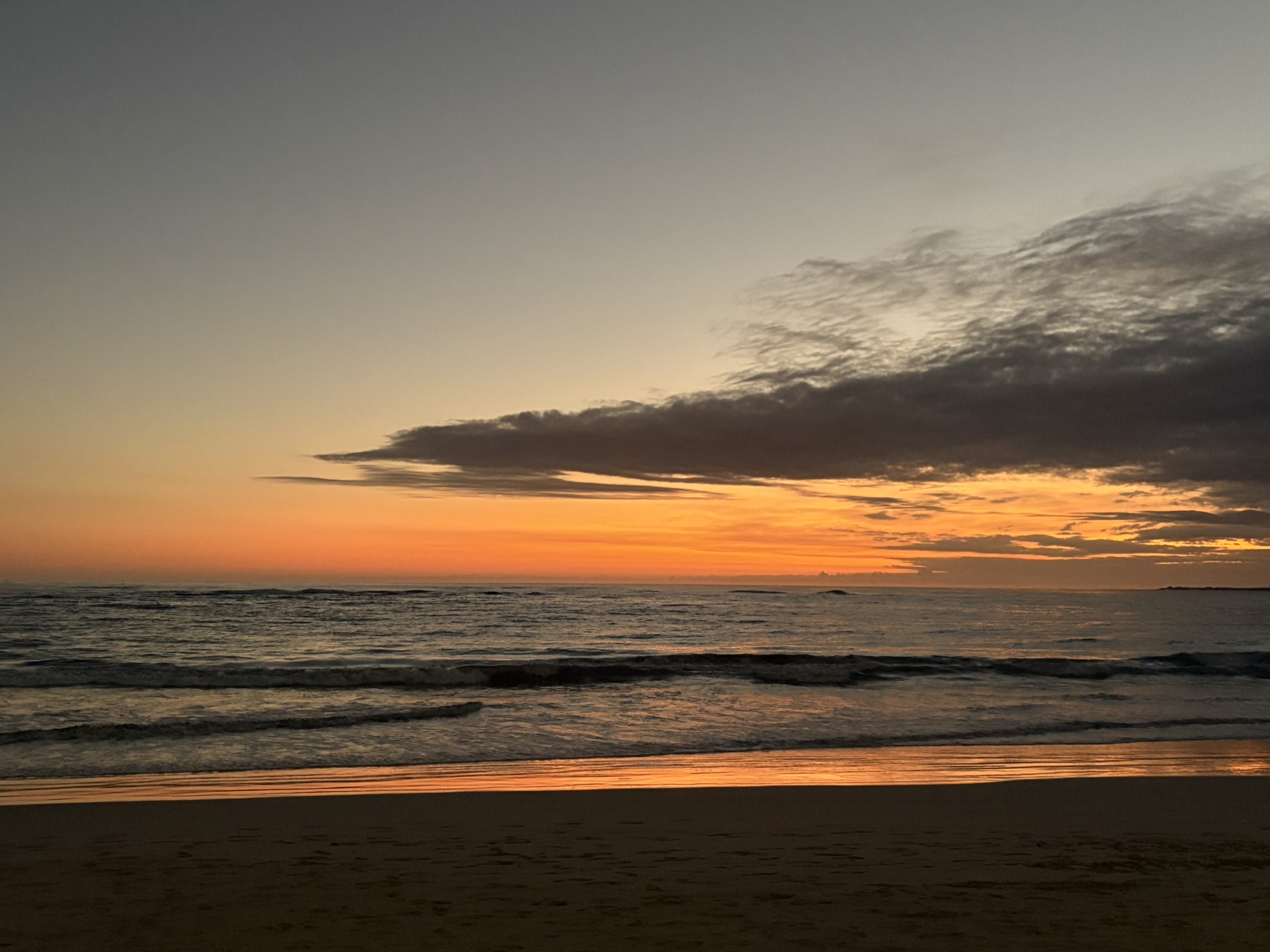
We have a lovely dinner by the beach watching the sunset and listening to the waves crashing.
Today is our last day – I’m rarely sad to leave after 2-weeks away but I would have been happy to stay longer.
We hike the Sierra Negro volcano with Nellie.
It is a gentle incline up to the top where we come to the second largest crater in the world (biggest is in Tanzania).
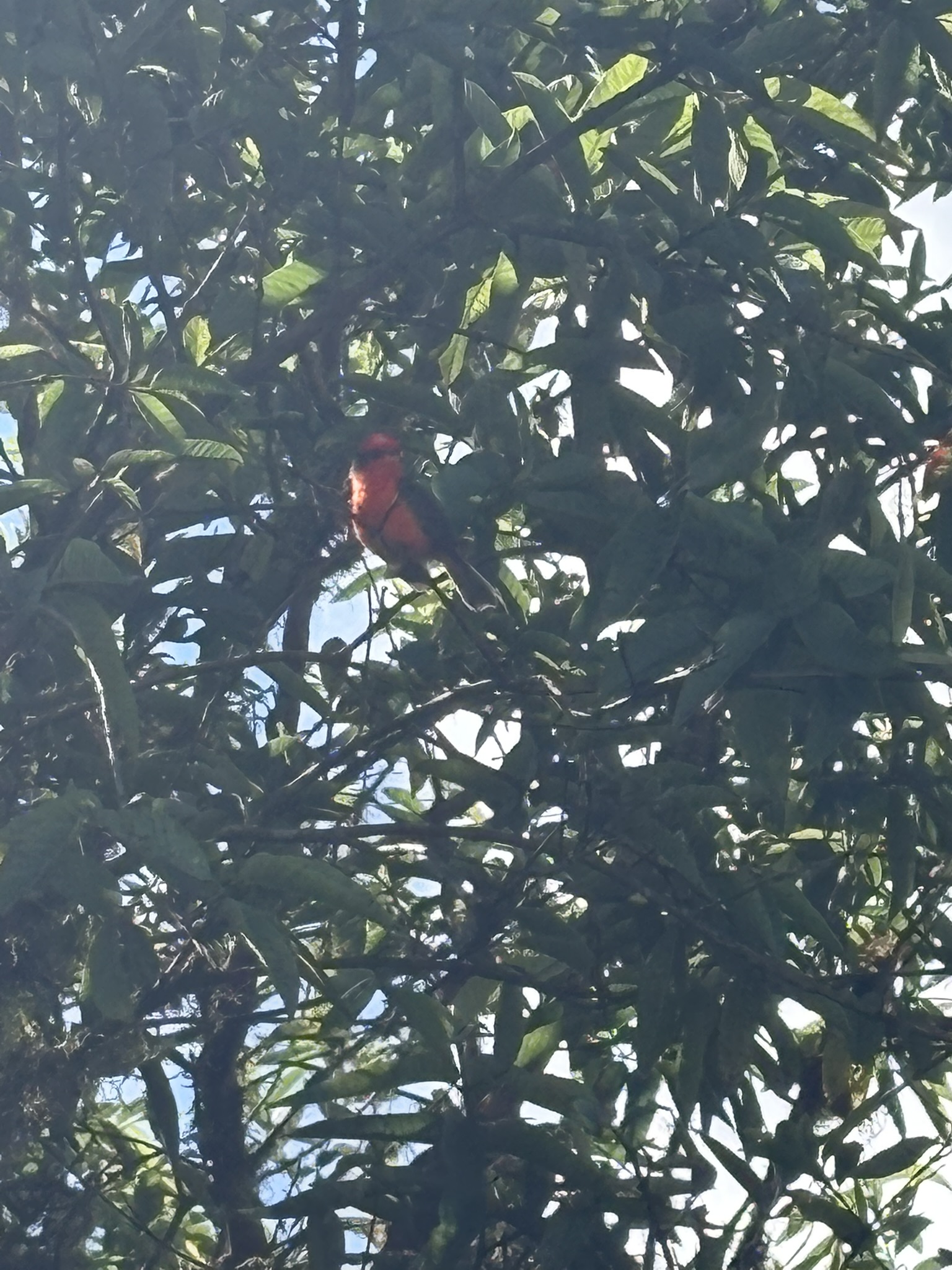
We see many Galapagos vermillion fly catcher – gloriously red which indicates a male. They are thought of as the lucky birds so we are lucky to see many.
The check in point is at 800metres and the top at 1000metres above sea level. That’s nothing for us!
The crater is 9km long x 7 km wide. It is still active and the last eruption was in 2018. Many people came up to see as they are not volcanoes that erupt high in the air. The magmatic chamber is 3km deep and is connected to the hot spot. Isabella grew 1 km into the sea with the lava rock at that eruption.
We then drive to a nearby organic farm. The owner Marcelo greets us. His mother is now 100 years old and his father just passed away a few months shy of 105. He farms mainly produces and chicken. Everything is delicious and fresh. All the farmers in the Galapagos must be organic. No chemical allowed.
A few places, we visited were accessible via paths covered by beautiful native mangroves.
Another beautiful evening by the beach!
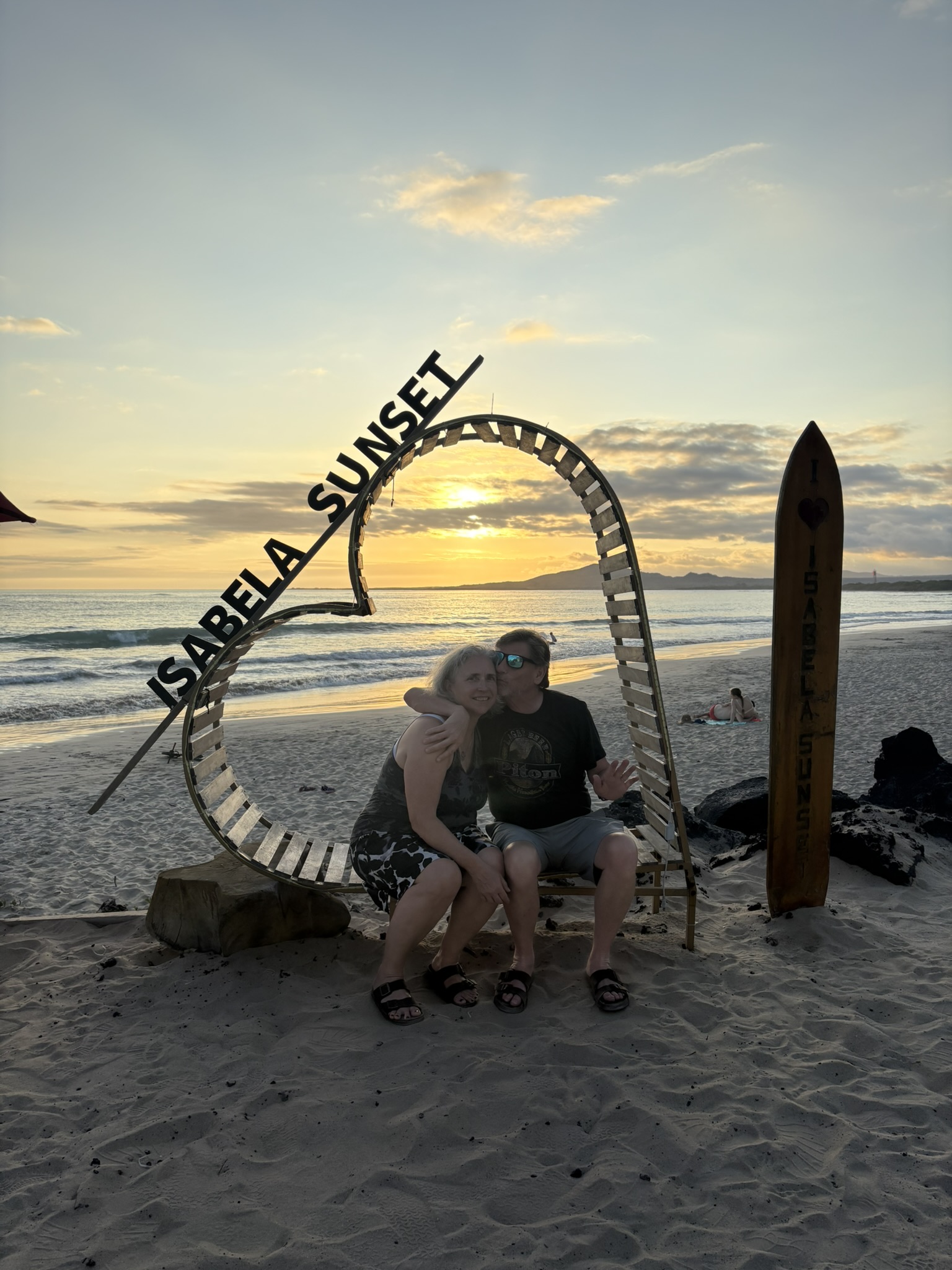
On our way back home after one of our best vacation…..truly loved this area and its people.
Facts
 We had a mixture of group tour when at sea and private tours when on land. I must say the private tours were well worth it as we are able to set the pace and customize what we want to see.
There is no homeless problem in Galapagos because immigration is only allowed when there are homes available. 97% is protected land so they restrict the number of inhabitants in the other 3%….maybe something to think about.
Water is a problem in Isabella . They have some brackish water for shower and toilet but drinking water is from purified rain water in the rainy season but in the dry season they must buy is from mainland. We forget how lucky we are in Canada. I wonder if we manage this precious ressource properly.
the majority of jobs in the Galapagos is in tourism which means the next generation interested in other careers must leave. It is significantly more expensive to live in the Galapagos than mainland and working in tourism is the only way to afford it.
The rangers and naturalists working in the tortoise breeding centres are very dedicated. Since the tortoises do not attain their best reproducing years until they are roughly 100 years old, they will not truly know the success of their program until this generation of young turtles that are reintroduced in the wild at 5 years start reproducing, by which time they will be long gone. Talk about investing in the future!!
 Martine's food and places