Blog Archives

Galápagos island – Santa Cruz Island – Chapter 4
We are on a road trip this morning. We see tortoise all over the road. Here if you hit a tortoise with your car, you are fined $25,000 and will spend 2 years in prison. They are not nocturnal so there is no reason not to see them.

At the beach – Playa El Garrapatero, we are very privileged to see 4 flamingos feeding with a black-necked stilt. Isabella tells us that the pink colors comes from eating shrimps. The better fed they are the more pink!

This beach is beautiful with a lovely brick path leading to it. Brown pelicans are everywhere. While there are Pelicans in Florida, the browns one are native to Galapagos.
We make our way to El Trapiche ranch to learn more about the local cane sugar and coffee process. They process the sugar cane very much like we process maple syrup, ending up with sugar through evaporation. He also makes moonshine with it. Here Chuck is sampling the moonshine mixed with pure cane sugar.
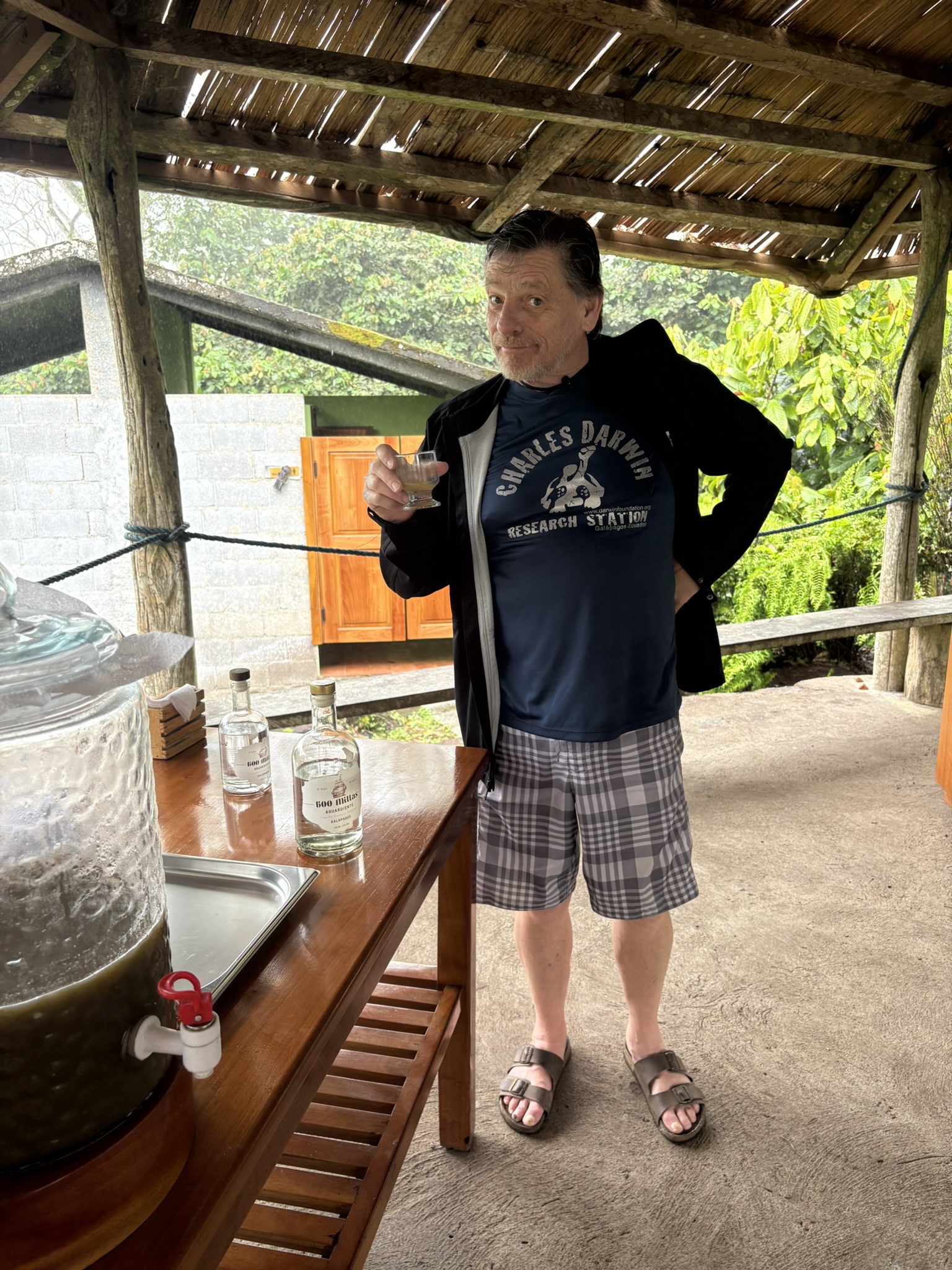
Love the microphone flowers they grow which are not native.
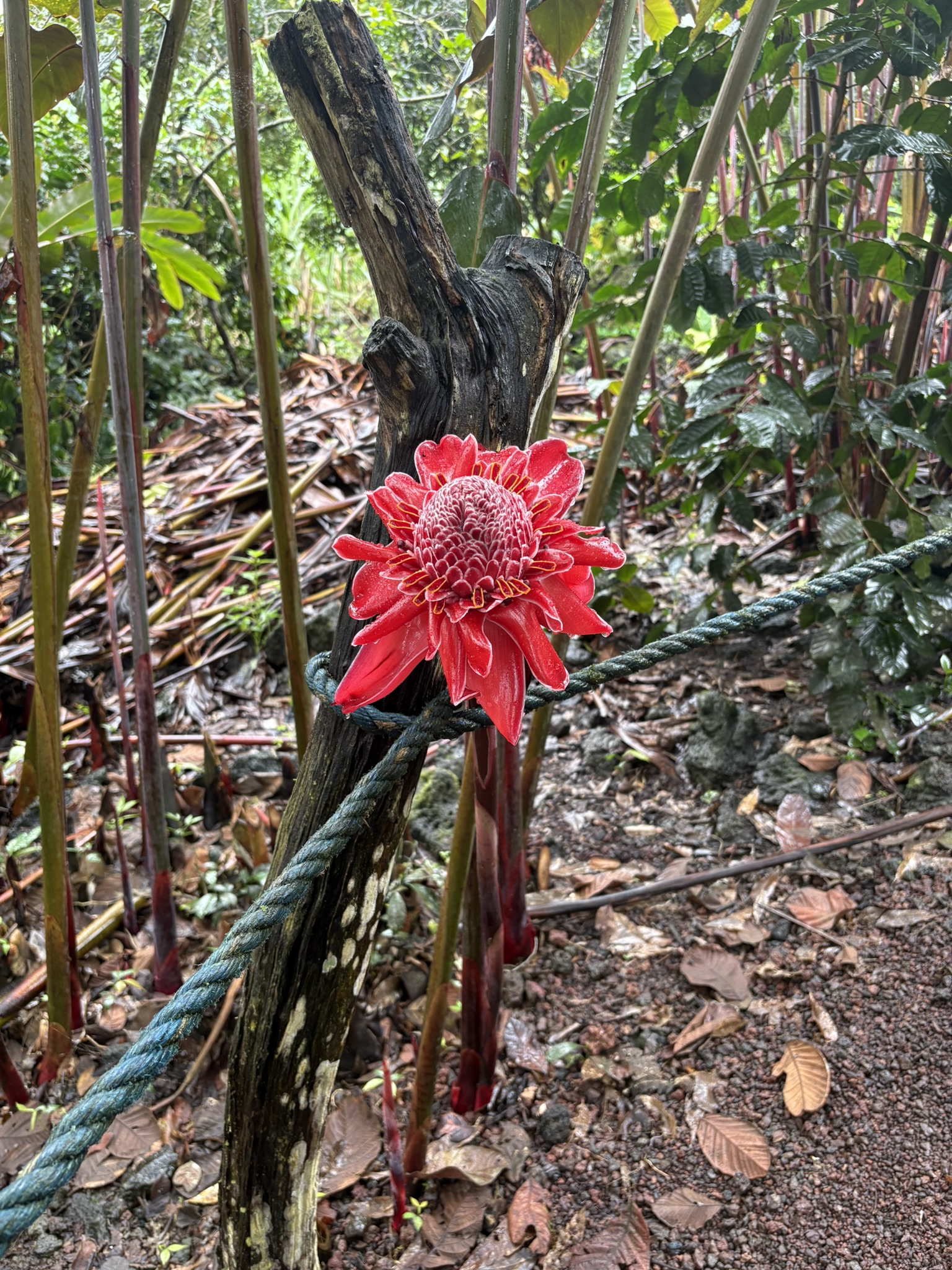
The 3 stages of the cafe bean.
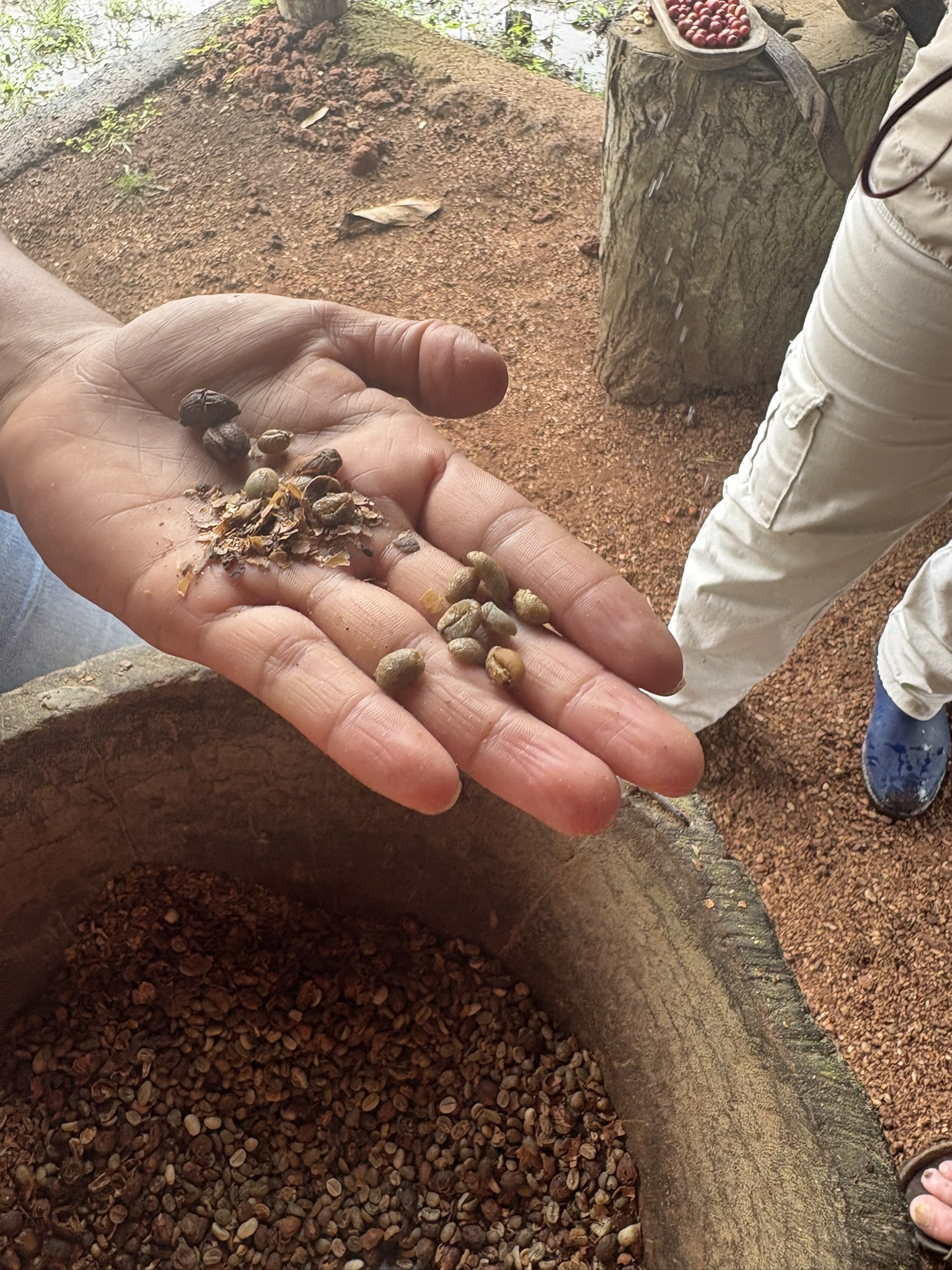
The coffee beans are excellent, we are invited to crunch some with a bit if sugar cane sugar and a small cacao bean. So good – my new favorite snack!
Adrianno owns the El Trapiche ranch, he arrived here in 1950 and is now 85 years old. Everything is harvested and processed by hand and 100% organic, with produces only sold at the ranch.

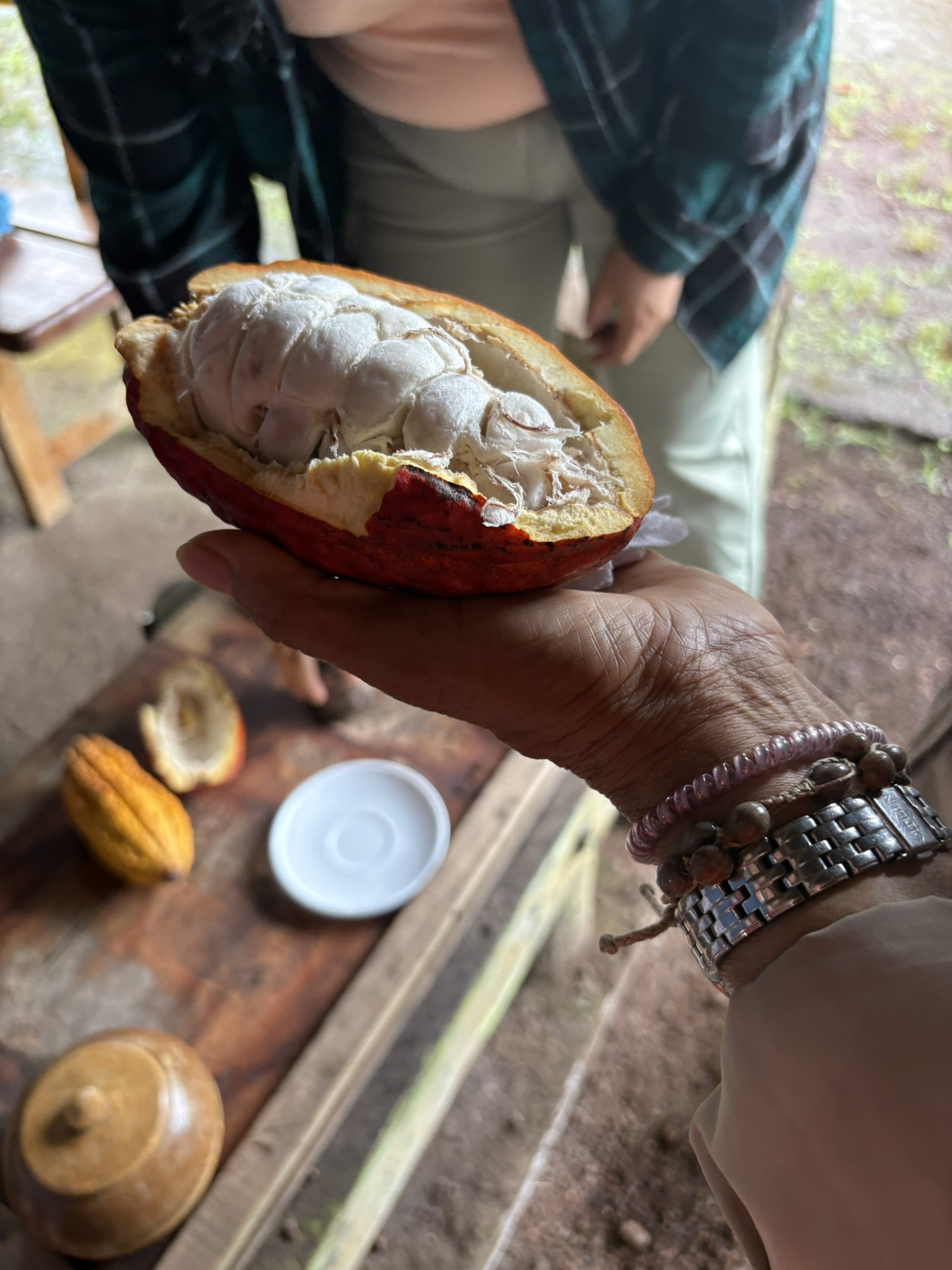
The Cacao beans which we are invited to taste prior to roasting. Tastes like a plum when you are close to the pit.
We see a field with cows and turtles and cow egrets eating side by side. It is interesting that cows, pigs and chickens were introduced by the Spaniards. Prior to that the ecudorian, similarly to the Incas, were mostly vegetarians and thriving.
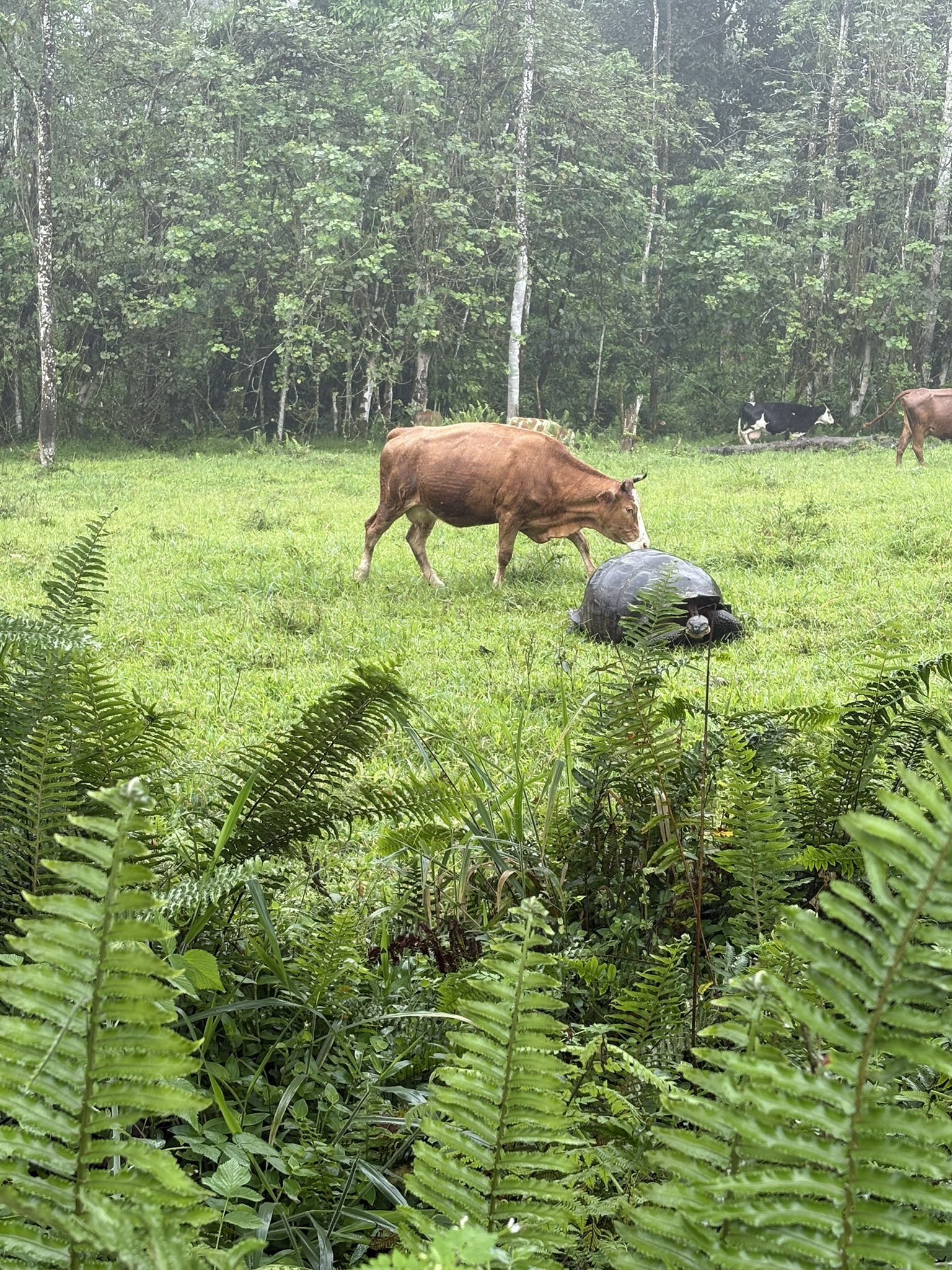
If they are slowly crossing the road, we must wait. During the rainy season they start their 2-weeks, 17 km journey to the dry area because they do not like when ponds overflow and grass is swampy.

12- We visit a lava tunnel. There are several on the island.
13- Over to the tortoise ranch for lunch and to observe some of the biggest ones on the island. The male can grow to 500 pounds. While they like to lay in a pond to rest, their face never goes under water and they must touch the bottom. We were lucky to see so many as the rain season has started.
I was excited to catch one in movement. Most of them are eating and static.
14- The next day, we are on an expedition to Seymour island. We begin with a gentle hike around the island. It is full of land iguanas, here we catch a male eating which is rare. Usually they are like a statue.
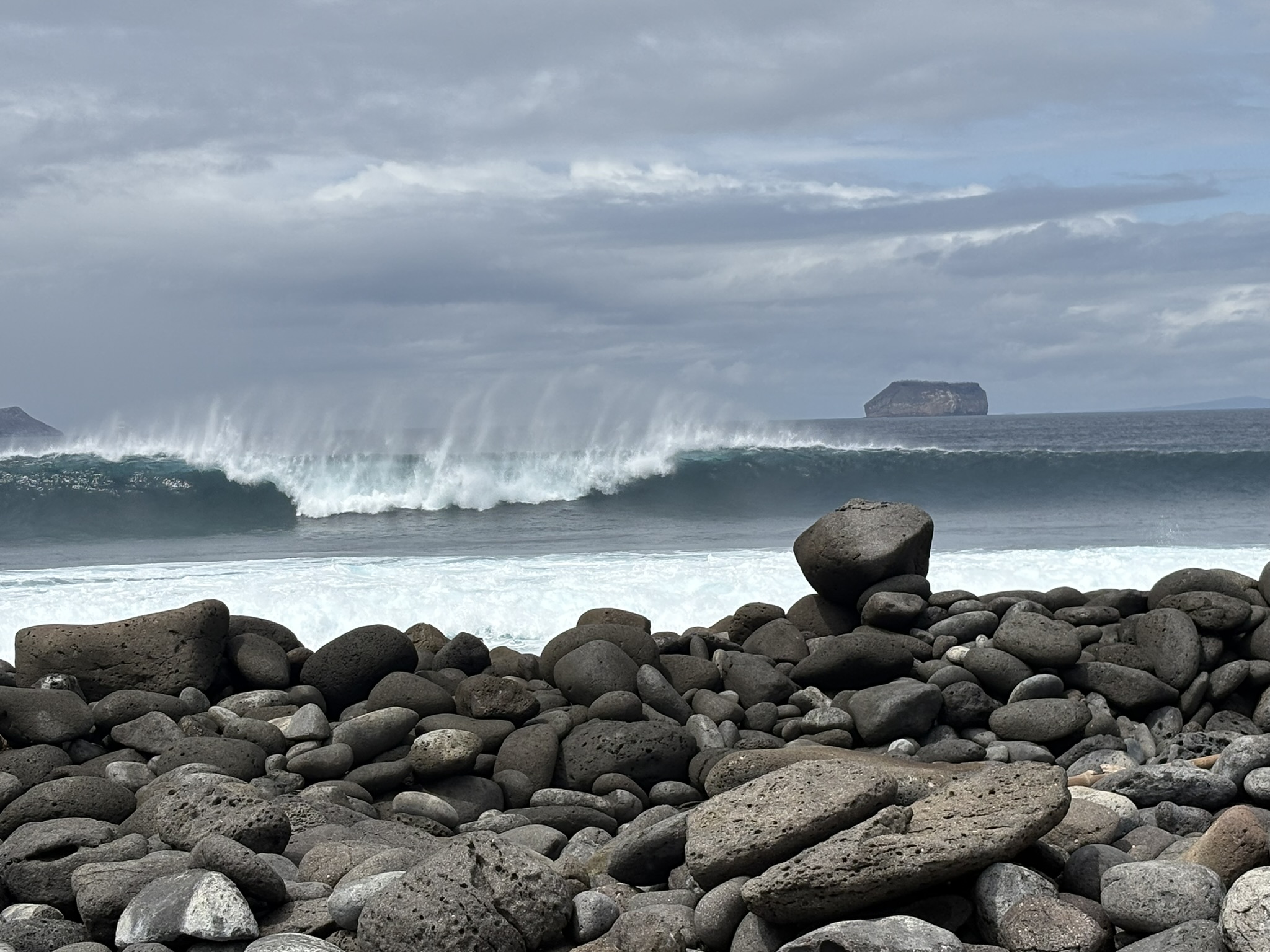
15- There is a beautiful spot where the waves are crashing with many sea lions froliquing.
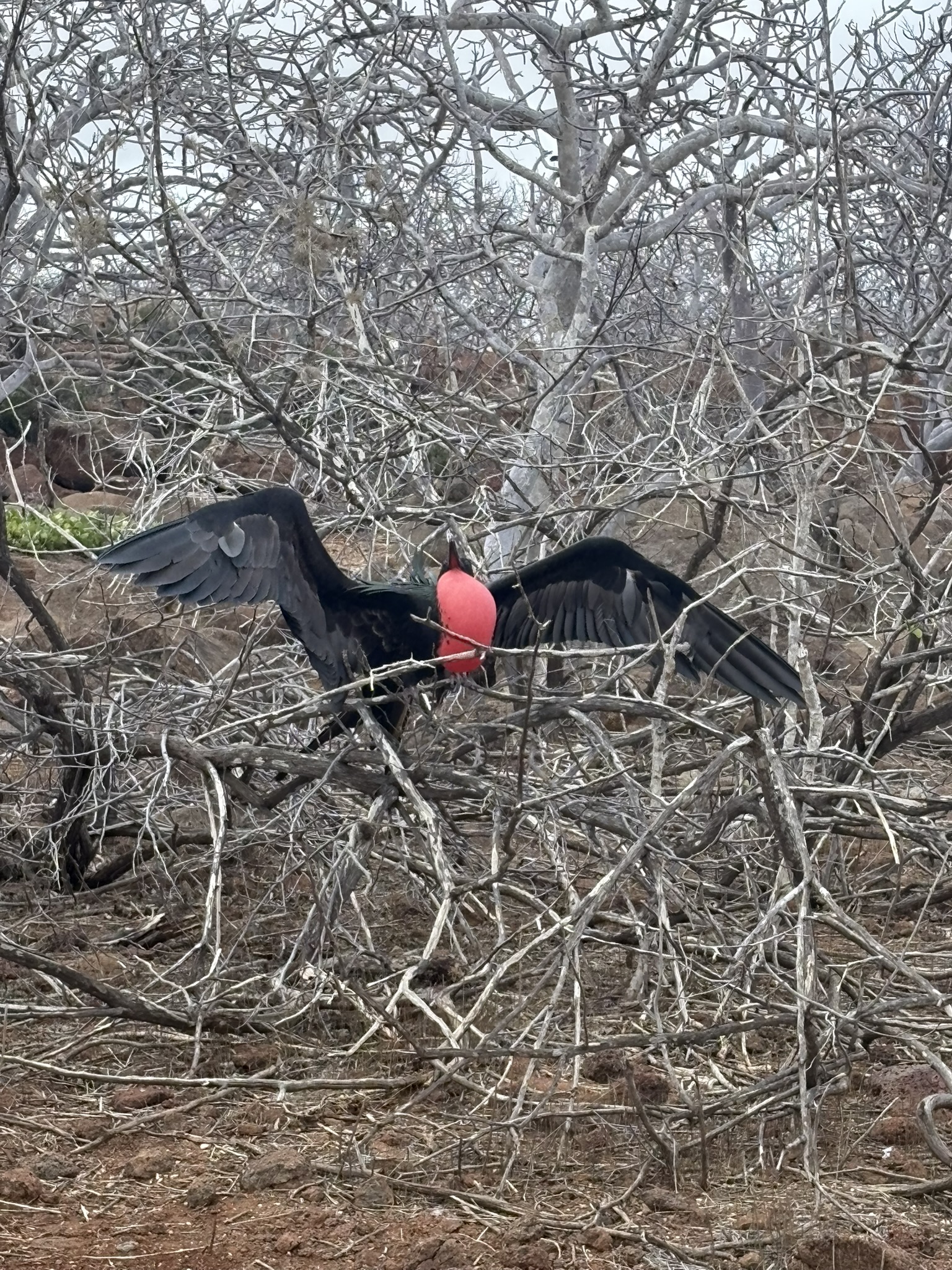
16- But mostly this island is known for being the breeding area for Frigatebird. When they were explaining that the male have this big red pouch to attract the female, I didn’t realize what they meant. They are puffing all right!! They stake their ground on a branch and do their best to attract the female. It is quite the show!
17- we also see cute 6-months old babies.

18- And more blue footed booby – normally they are mostly gone by now so we feel lucky to be able to see a few.

19- Off we go snorkeling again. Ricardo prepares us for seeing sharks. Here they are full of fishes and have no interest in humans. It is hard to wrap our heads around this. But sure enough, we come across a small black-tip shark and then….a group of probably 20 white-tips SHARKS swimming right there below us. Some up to 6feet long. I stay close to Ricardo. Chuck has had enough and gets out of the water.
It is really an unbelievable experience! I curse myself again for forgetting our underwater GoPro.
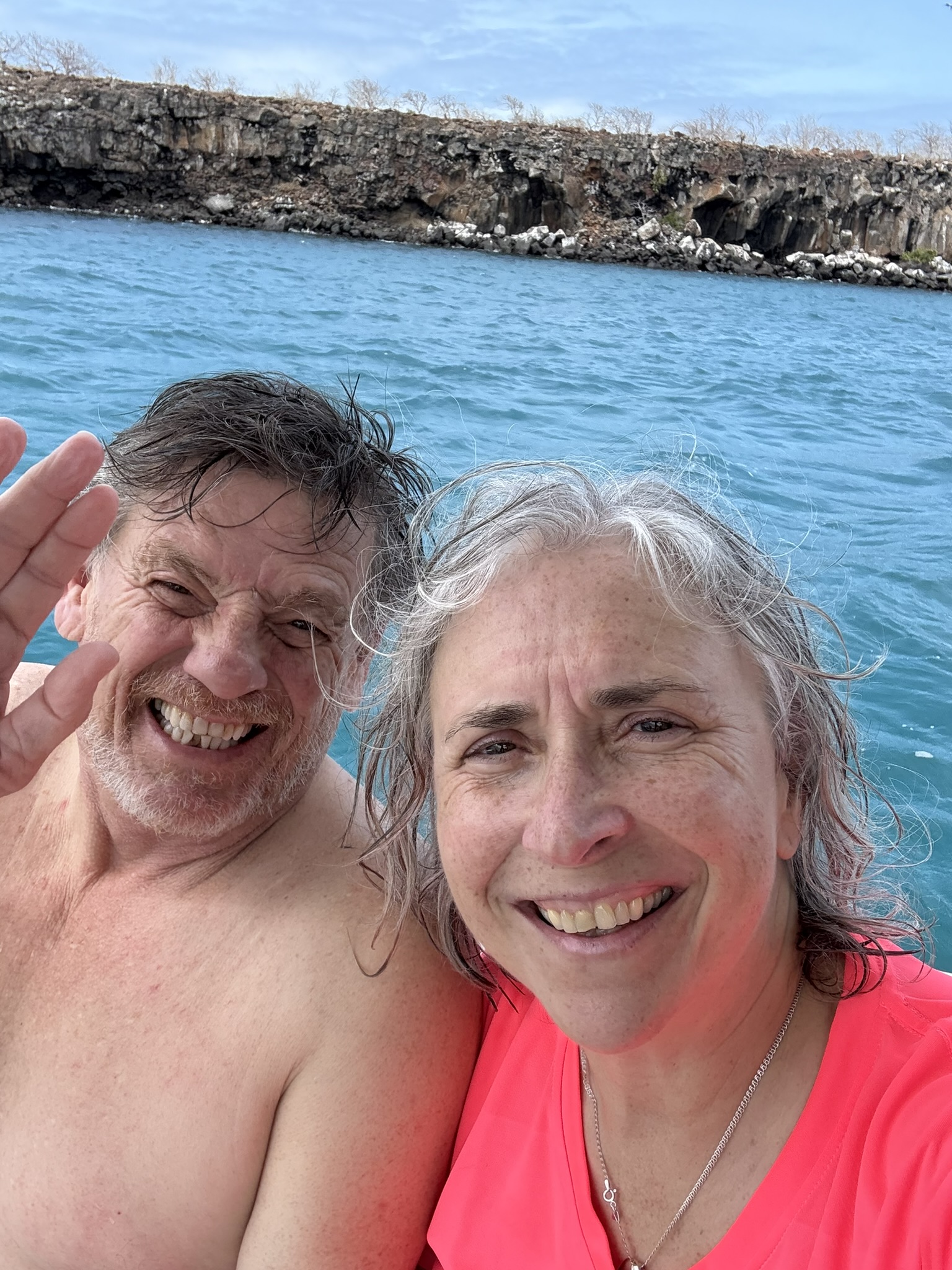
20- There are so many pristine and beautiful beaches here!
21- We walk to the other end of the Main Street to end the day with a lovely dinner at a restaurant overlooking the water. The setting is fantastic.
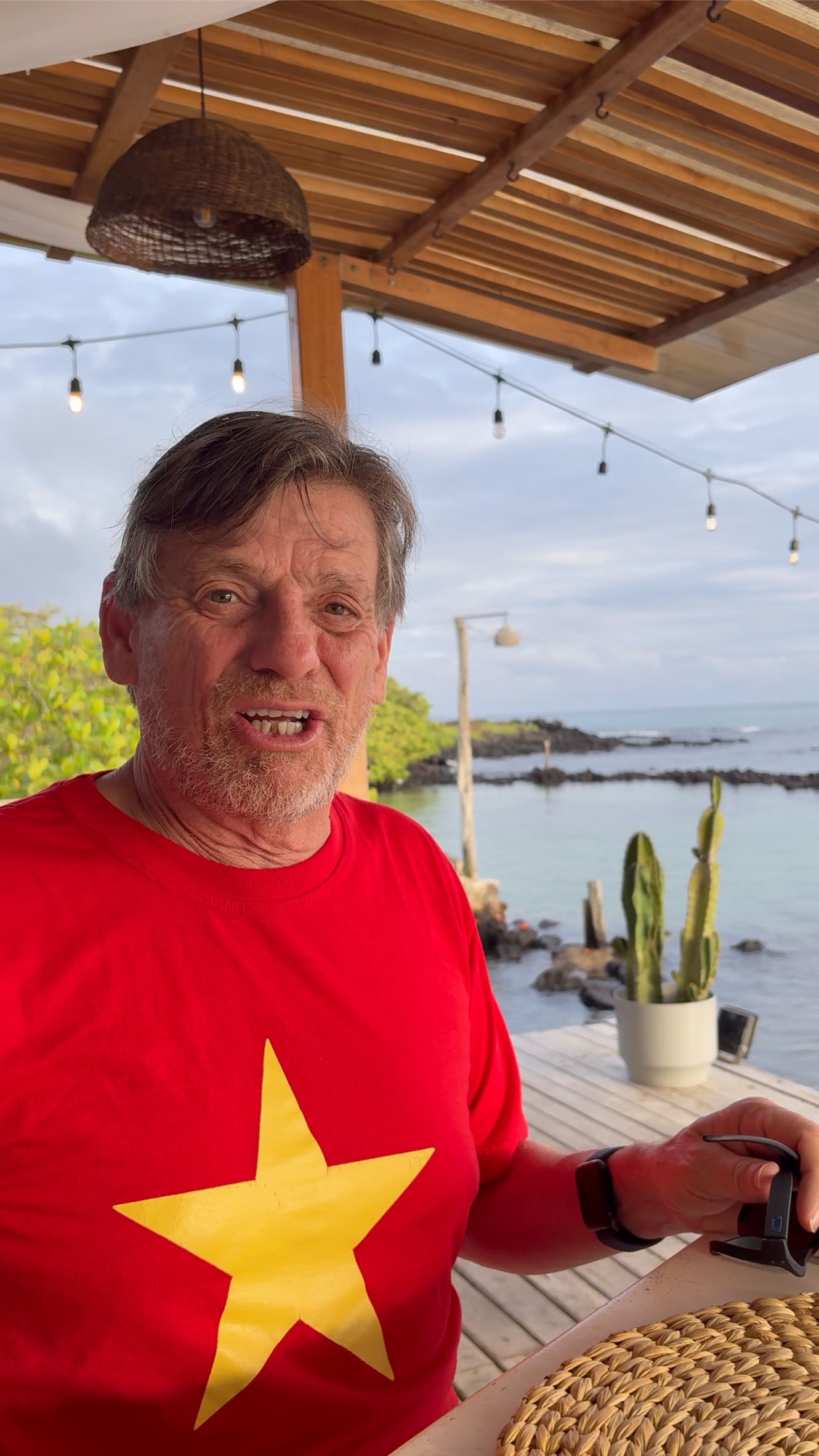
Tomorrow we leave for Isabella island and more adventures!

Galapagos – Santa Cruz Island, Chapter 3
In the afternoon, we are off to the Tortoise breeding center and the Darwin centre with Isabella, our local guide. I am very surprised with the sizes and number of prickly pears cactus, indigenous to the island.
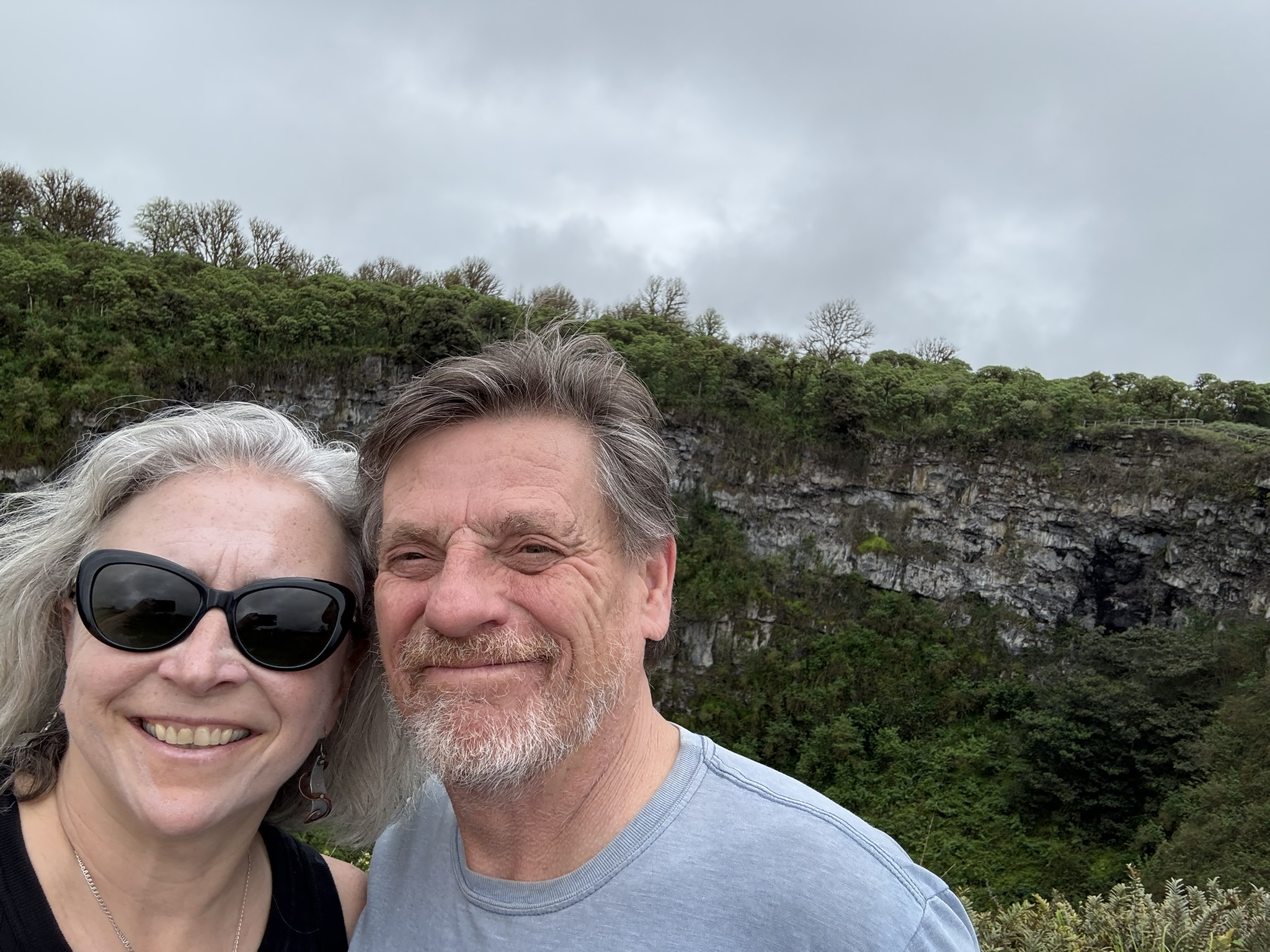
It is so interesting to learn of their efforts to rebuild the turtle population that was depleted to 20,000 across all the Galapagos in 1960, due to pirates and fisherman that were using them for food and then for oil on the mainland. Due to their efforts with incubation and breeding, they now count more than 60,000 tortoise in the islands. There are 15 species but 4 are extinct.
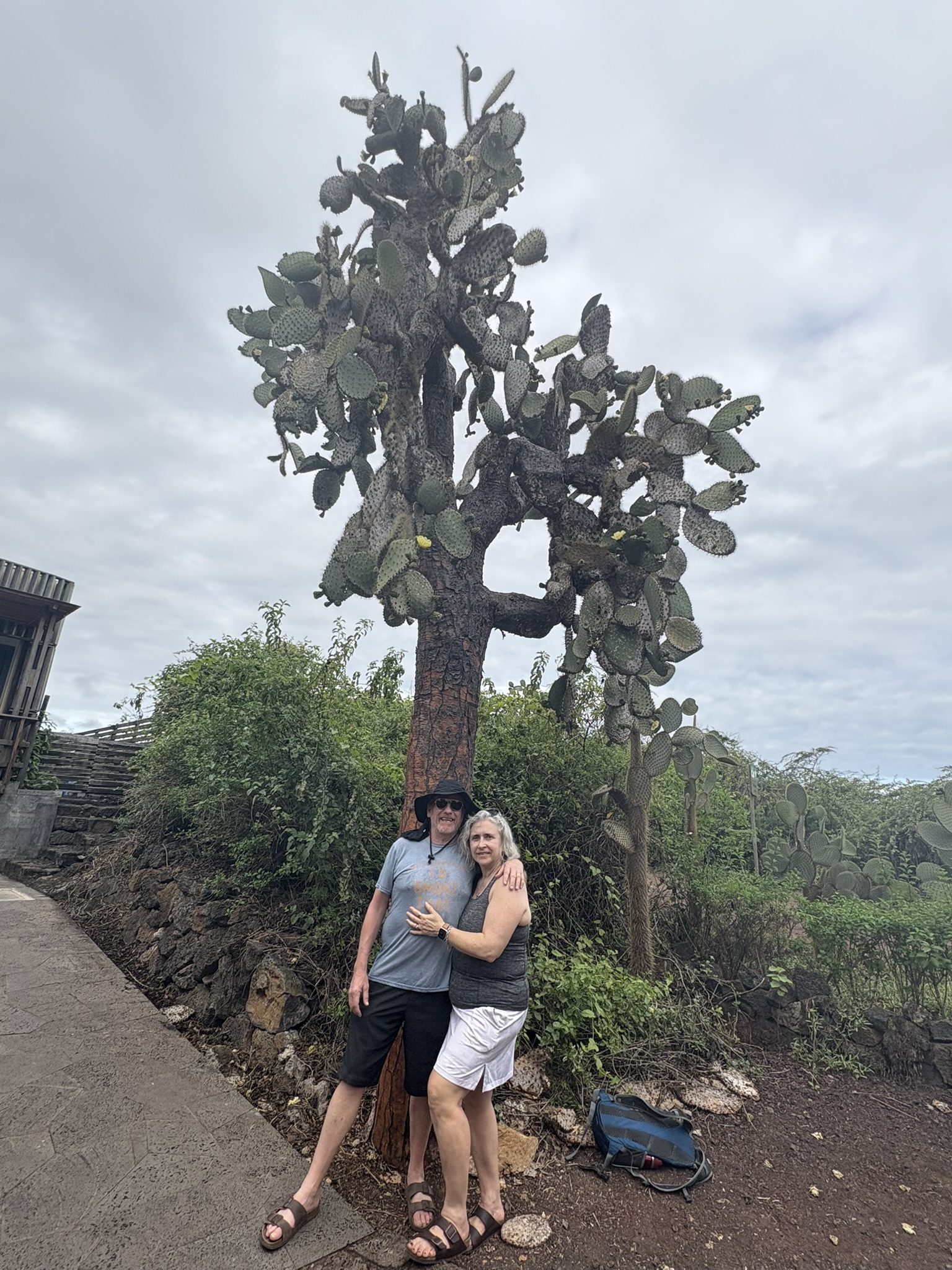
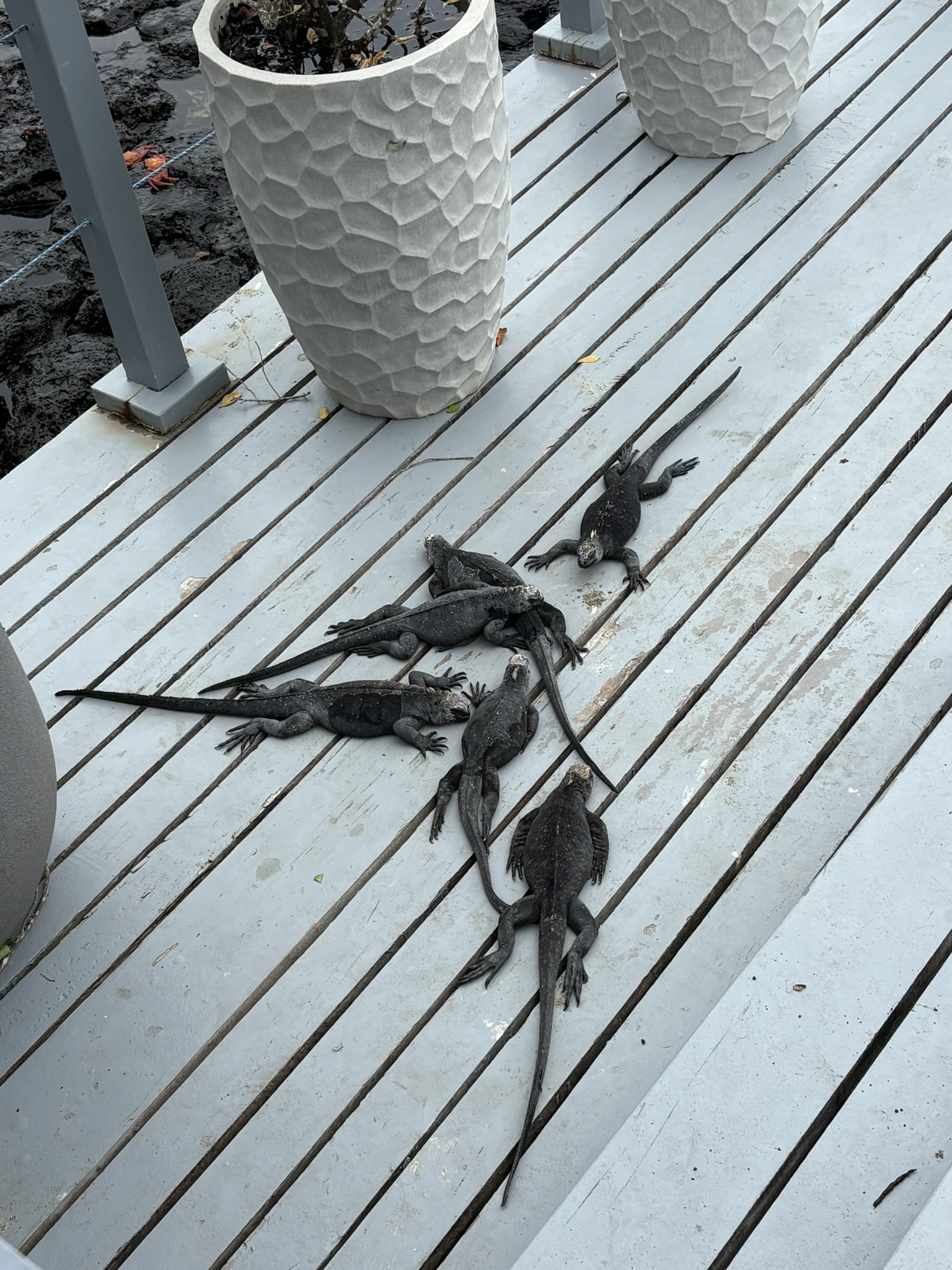
On day 1- our travel agent reserves a table at Bahia Mar for our first day, a lovely restaurant with ocean view. It is delicious and we enjoy watching the many iguanas sunbathing and the red crabs that we will see very often.
For example, they were successful in bringing the only remaining 13 female and 2 males from on if the islands many years ago and breed them to 2000 eggs the first years. They then reintroduce them in the wild once they are 5 years old because at that age, their shells are hard and they no longer have predators. Tortoises reach puberty at 25 years old. At the centre, they only feed the babies 3 times a week so that they continue to find their own food the other days to be better prepared to go back.

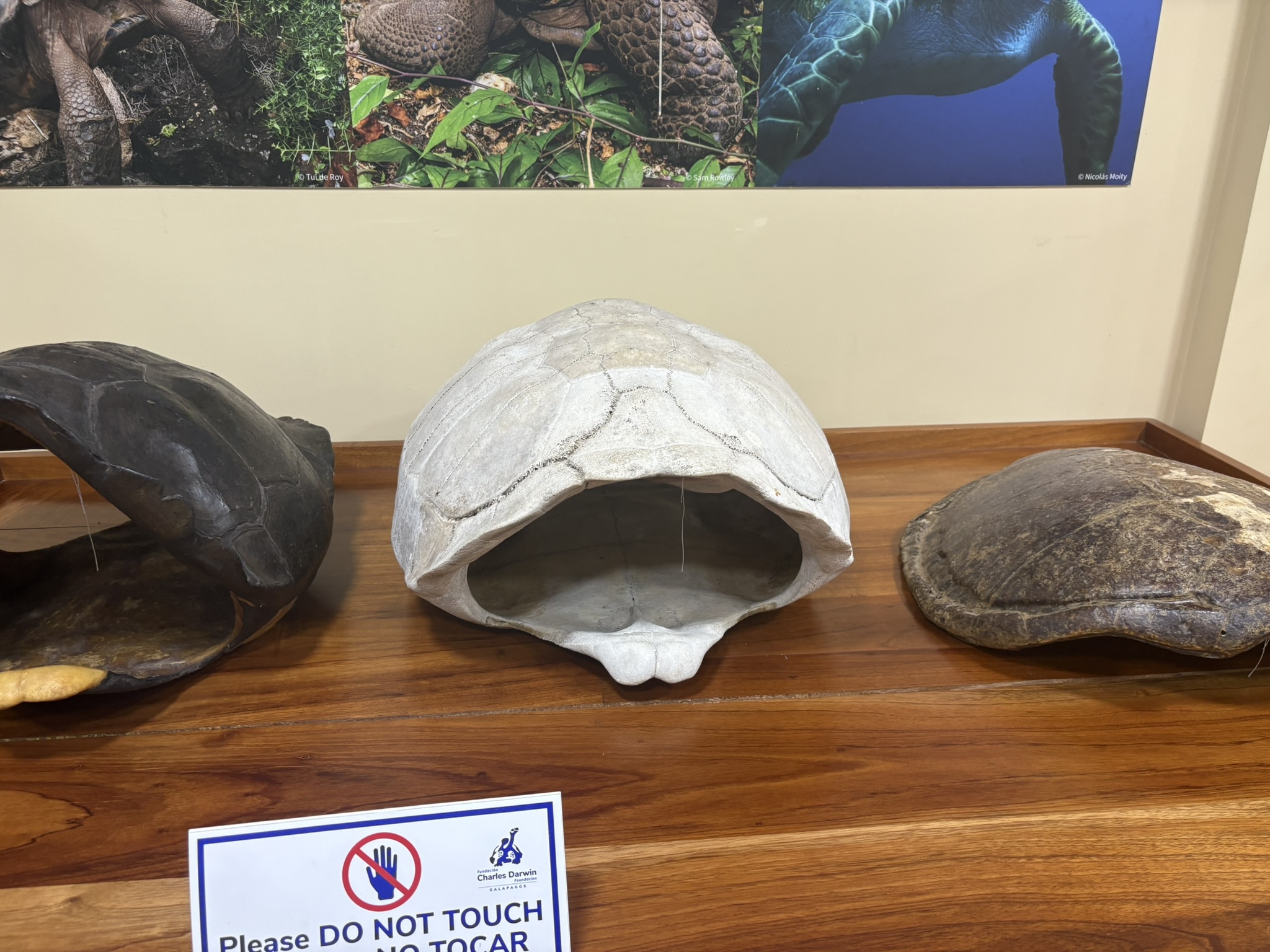
We see small 1 years old babies to 50 years old adults that are here to breed and then go back. We learn about the many small lizards that are critical for the cycle of life here as everything eats them as well as the difference between the shapes of the shells of the tortoise depending if they are marine, low feeding or high feeding (with long neck that do not retract into their shells).
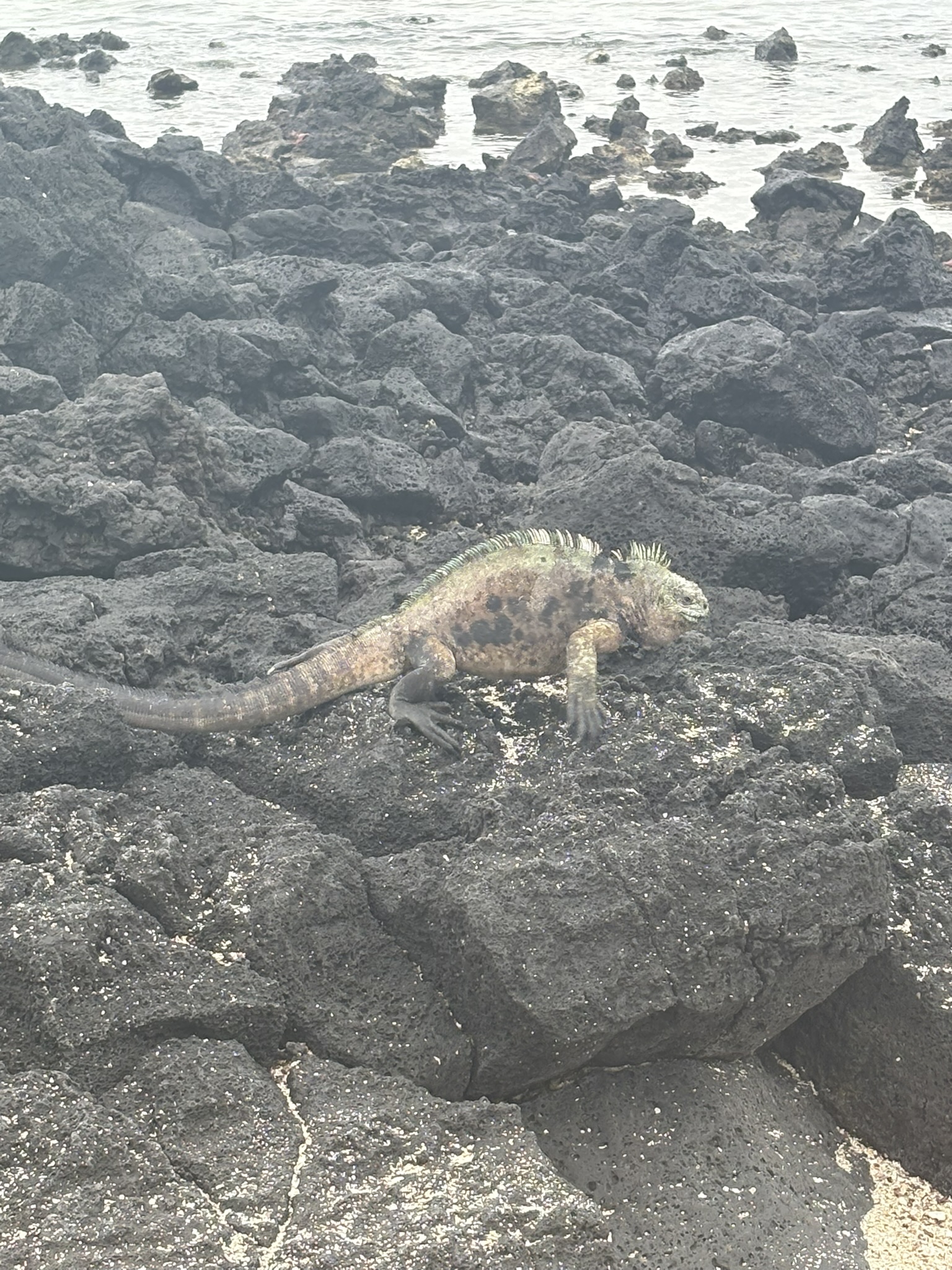
A small local beach near our hotel teeming with life – the iguana leading the way.
Same type of iguana but a male showing off its colors to attract a female.
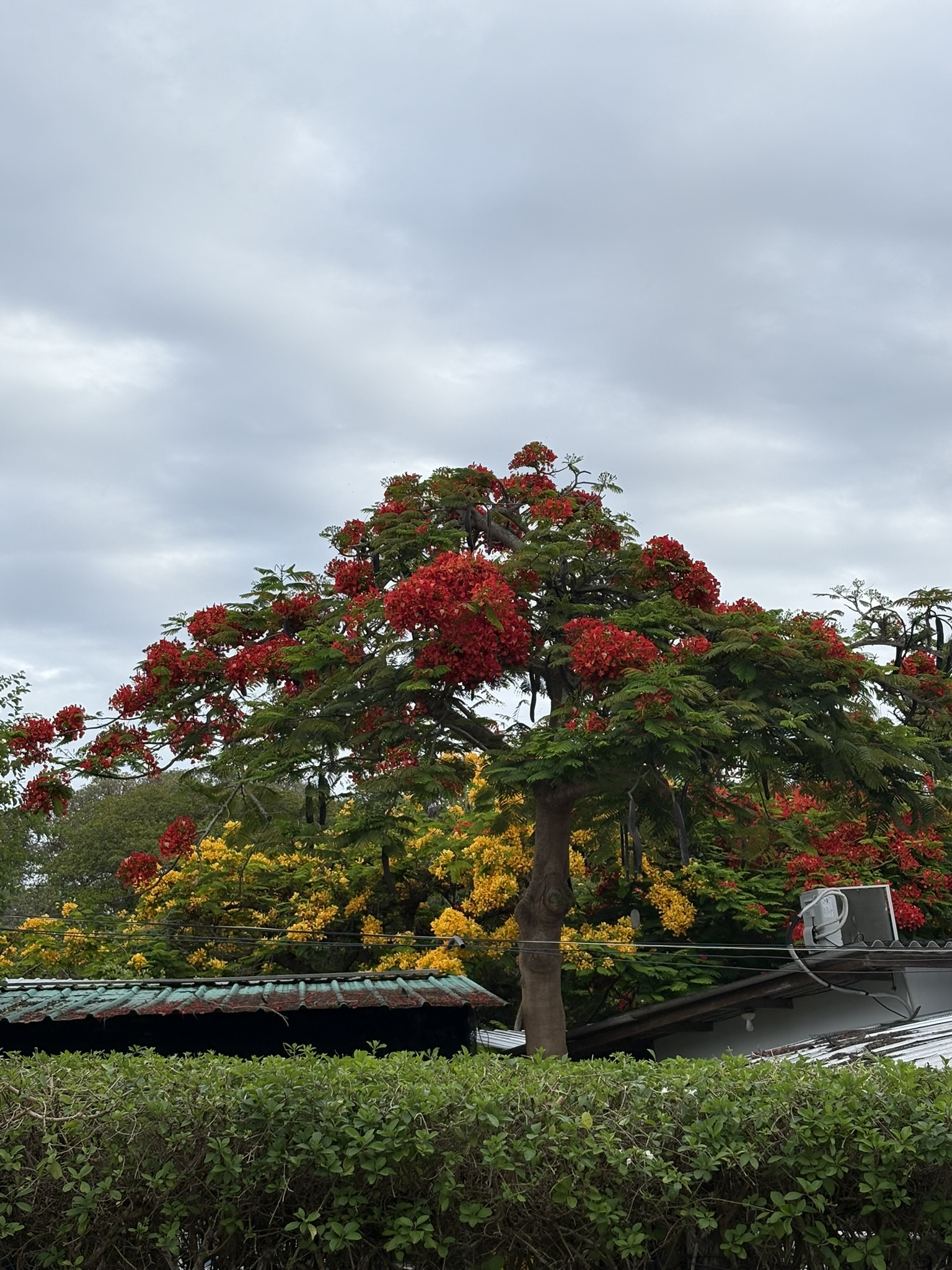
Isabella points out many vegetation including the glorious red and yellow Flamboyant that originates from South Africa but is not invasive. There are beautiful native yellow hibiscus also and the tree that is used to make Panama hats (which are really ecudorian). This tree only grows here. She tells us that the only indigenous flowers here are either yellow or white.
Getting ready for our day trip to Bartolomé and Santiago (hoping to see penguins!)
We board a nice yatch with a small group, including 5 ladies from Iceland who have knows each other for 40 years and have started travelling together. How cool!!
It is a 2 hours cruise and our first stop is bypassing another uninhabitate island to learn about the local sea birds. Here we catch a Frigatebird in flight (known to be able to fly at sea for 2 months). On the way we see many dolphins swimming very near the board as well as turtles, sea lions and one shark. The sea is full of life here.
Arriving at Bartolomé, we disembark and must dislodge a large sea lion sunbathing on the steps. He isn’t happy to be disturbed from his siesta 
Filipe explains that the difference between seals and sea lions is that the sea lions swim but moving their front limbs and using their back shoulder which requires a lot of energy, whereas the seals use their tail which is easier. Therefore sea lions are always exhausted  which is why they are always lounging.
Our guide is super interesting and knowledgeable. I will capture a bit of the info he shares here.
We make our way up to the summit on a path built of wood with flat sections and stairs. Along the way our guide Filipe, tells us about the formation of Volcanoes, and more specifically the Galápagos Islands. We learn that St-Ferdinand is the youngest one at 500,000 years and is the one sitting right on top of the magma chamber. The oldest ones is in straight line to the east at 5 millions years old. In between, we have Isabella where we will go towards the end of the week and Santa Cruz where we are staying now. We learn about “tuff” which is the packed lava we see everywhere and the lava cactus. This cactus is about 100 years old because of its small size but there is a large one on St-Ferdinand that they estimate is 800 years old and is 6 feet wide. As their branch die and decompose on the ground, they create the condition for more vegetation to come.
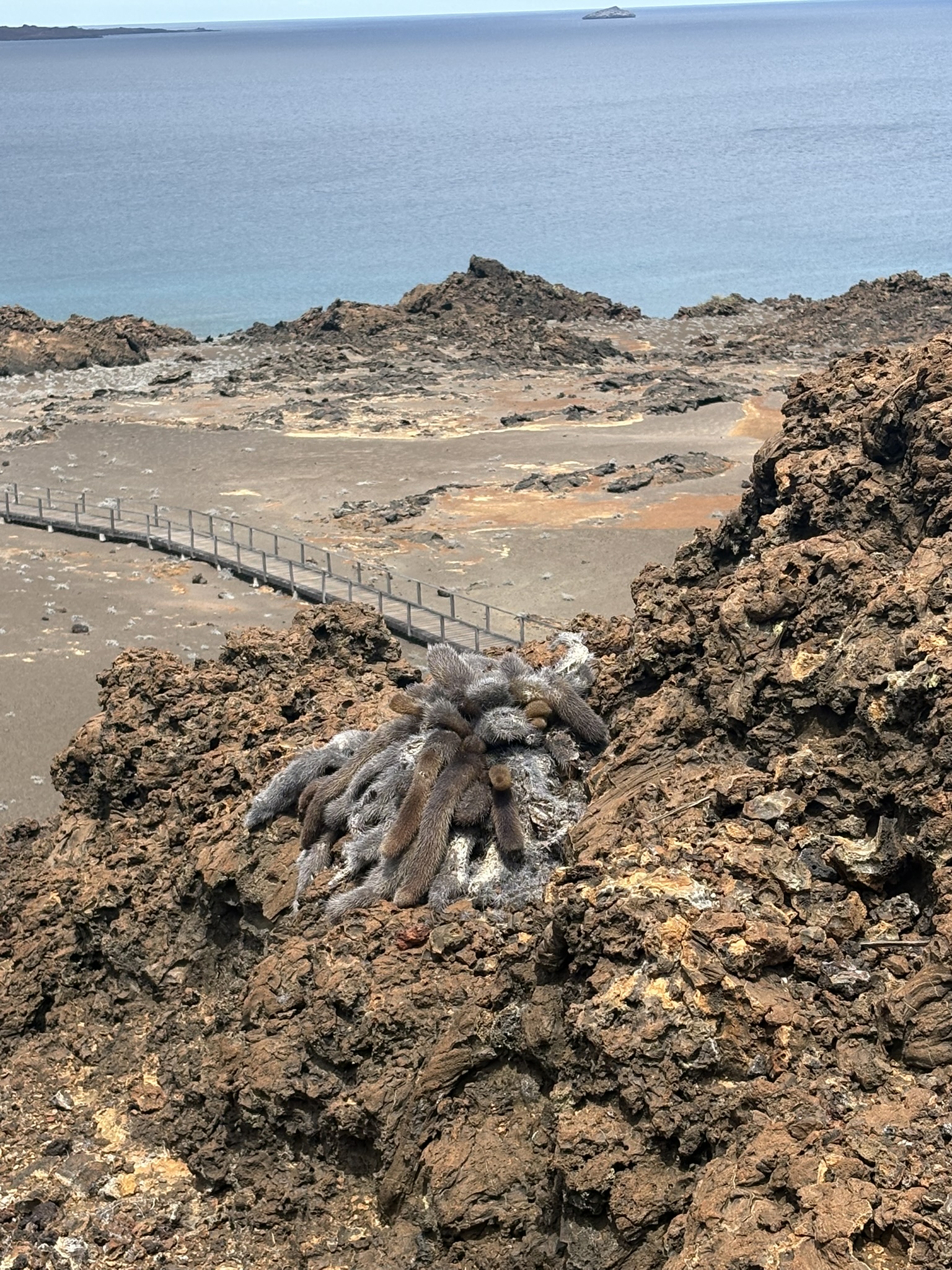
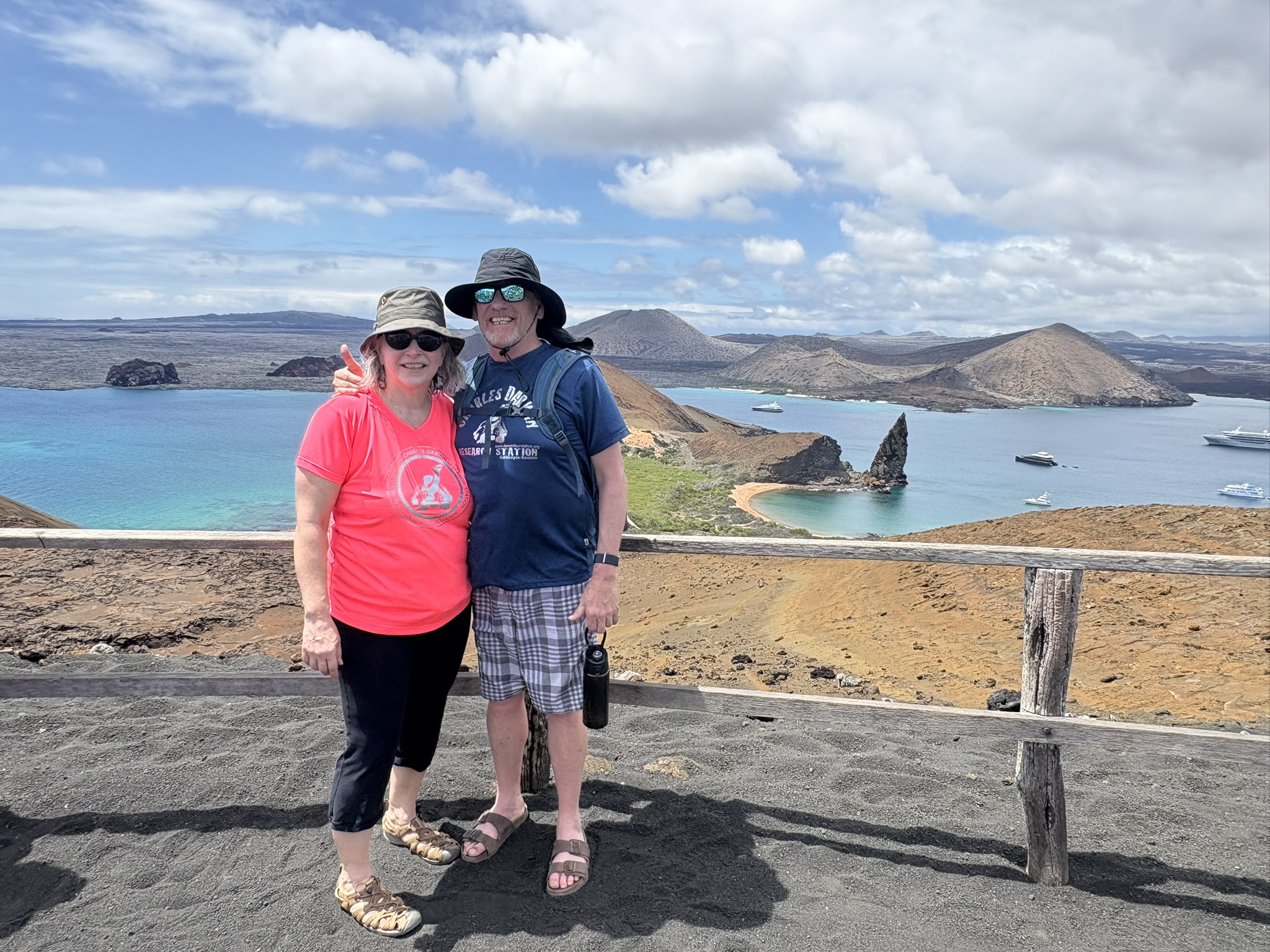
The view at the top is very spectacular, with turquoise water surrounding us and the iconic Bartolomé Pointy rock.
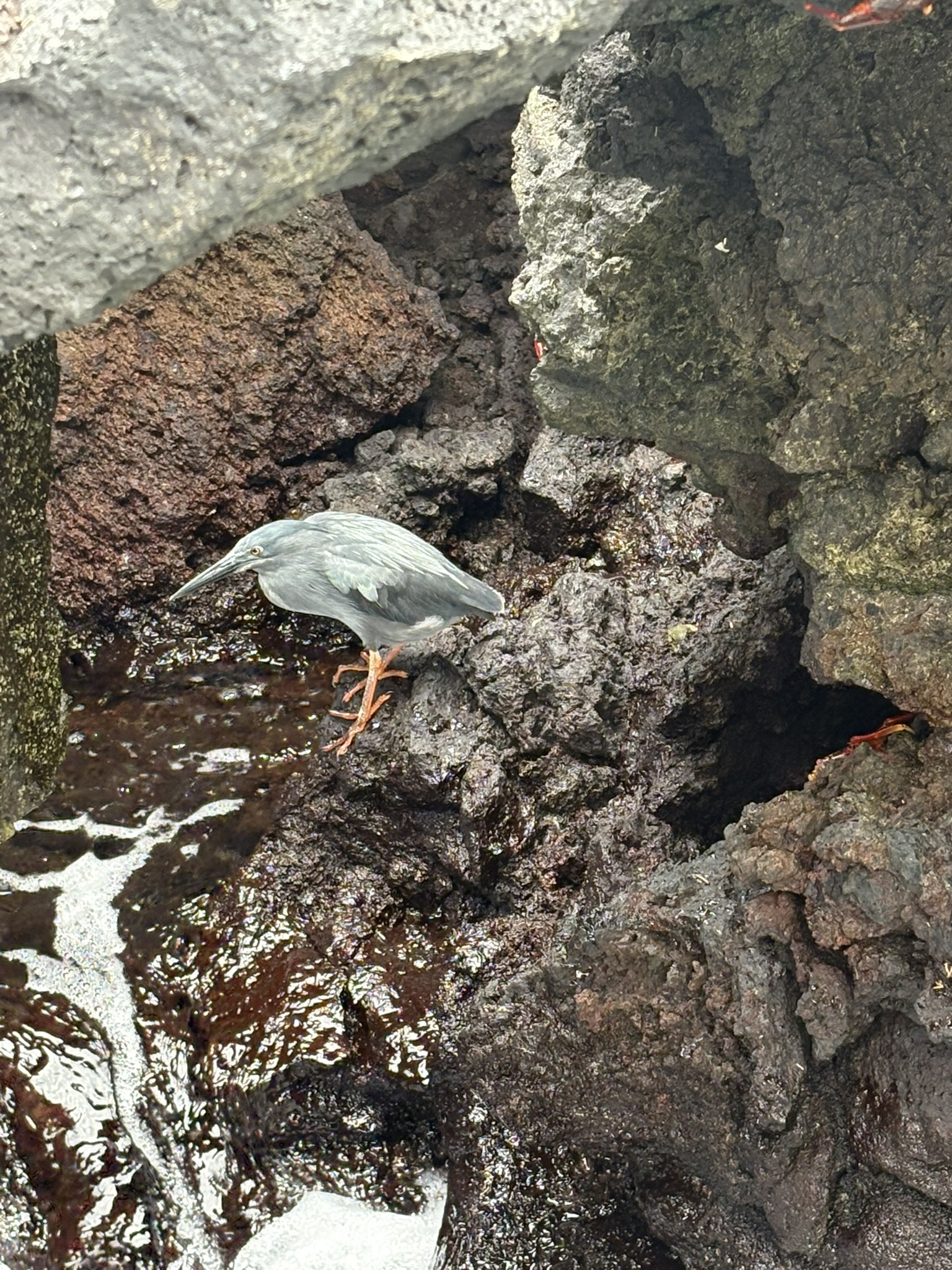
We come back down and discover a lava heron nestled in a hole in the rocks besides the stairs of the dock.
Our sea lion is there swimming around waiting for those darn human to leave so he can get his spot back. As soon as there are only a few left, he makes his way up and there is nothing Filipe can do!
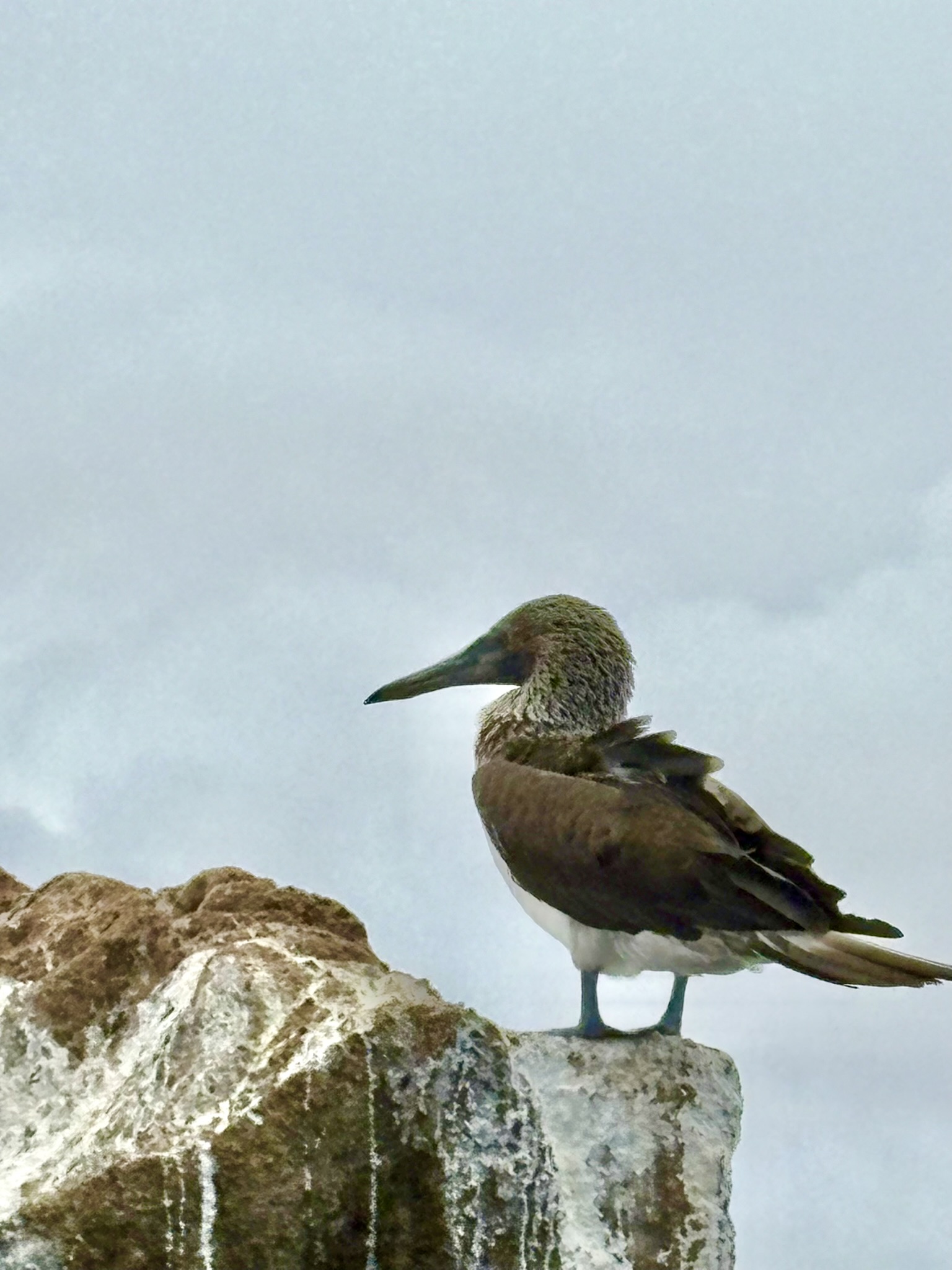
Onwards to the local small penguin resting spot and the white beach in Santiago for snorkelling. on the way we find a blue footed Booby handing out with 2 playing full sea lions.
Once organized with our snorkeling equipment in the water, we are treated to a rainbow of colors – the fishes we see are amazing! Many “Nemo” orange fish as well as blue, yellow, red, purple, green etc…, my favorite being the bluechin parrotfish both make and female. Also urchins and then all of sudden, a PENGUIN swimming right besides us. Maybe 2 arms length from me! So cute and again so oblivious to humans. The one swimming near me with is more brown than black identifying him as a juvenile. What a treat!!
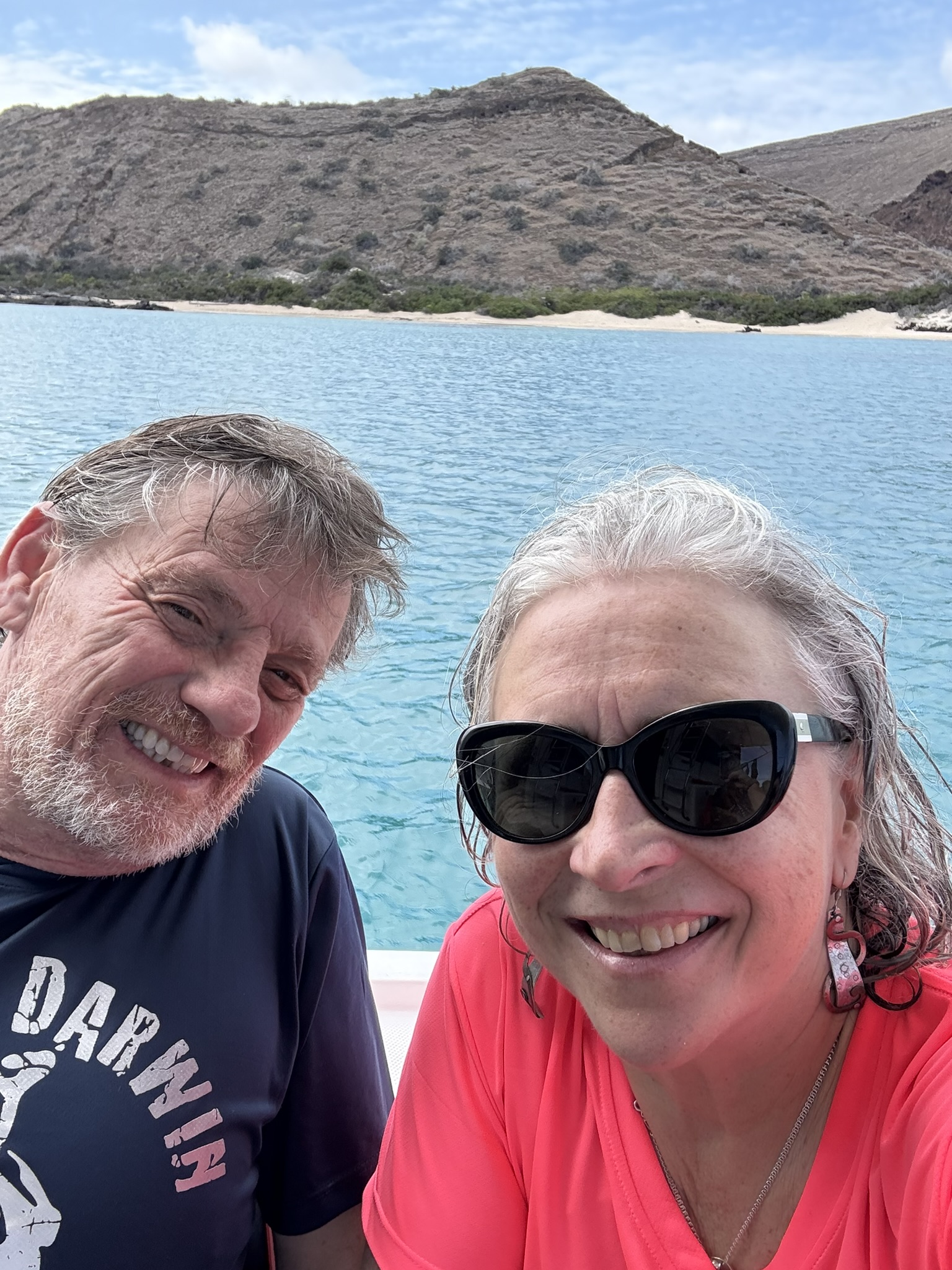
Back in town we walk to an excellent restaurant and Chuck orders a meal of « deep fish sticks ». It is sooo delicious and huge!
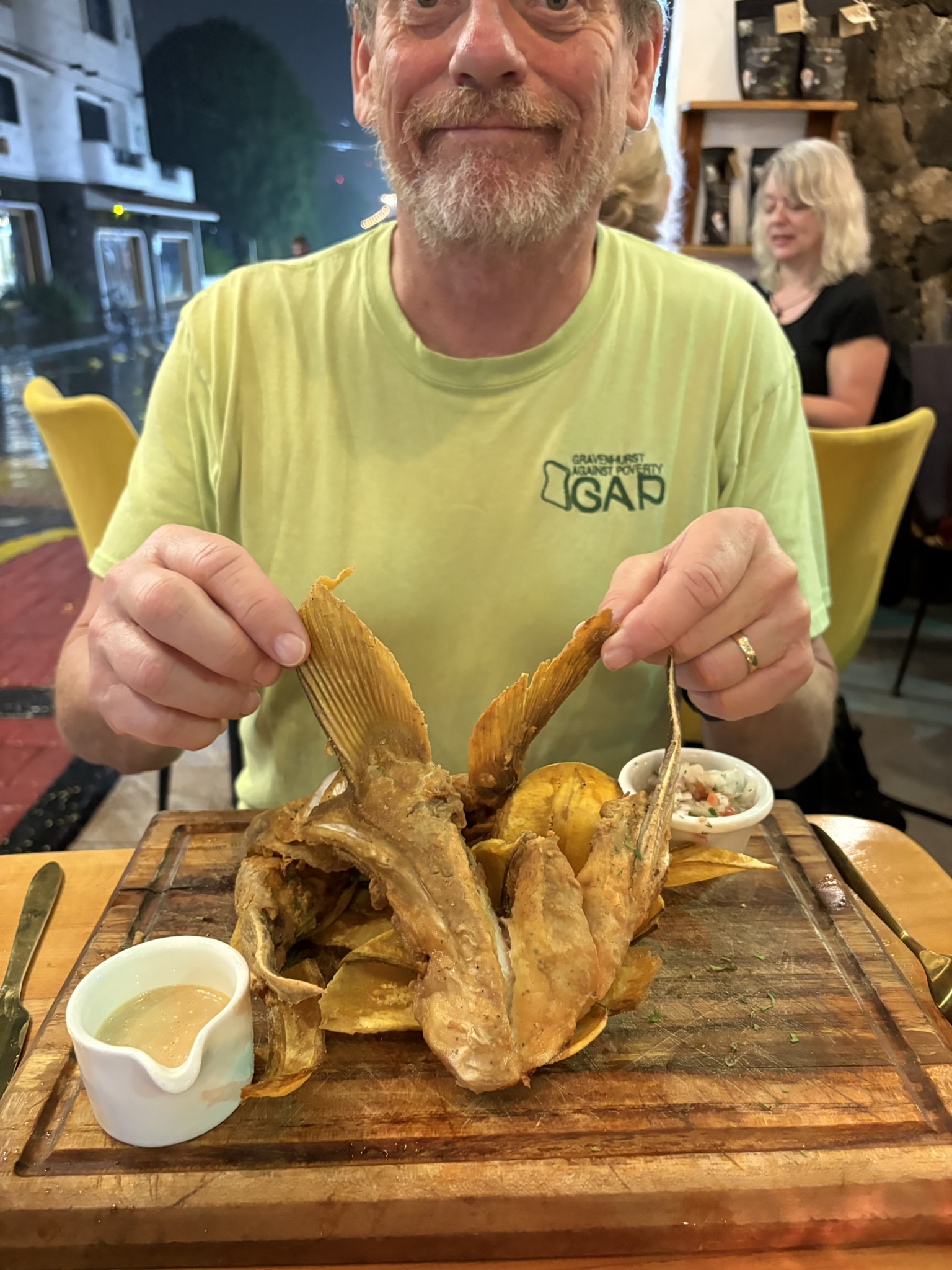
Fabulous first days in Galapagos. Can’t wait for the rest of the week!
 Martine's food and places