Galapagos – Santa Cruz Island, Chapter 3
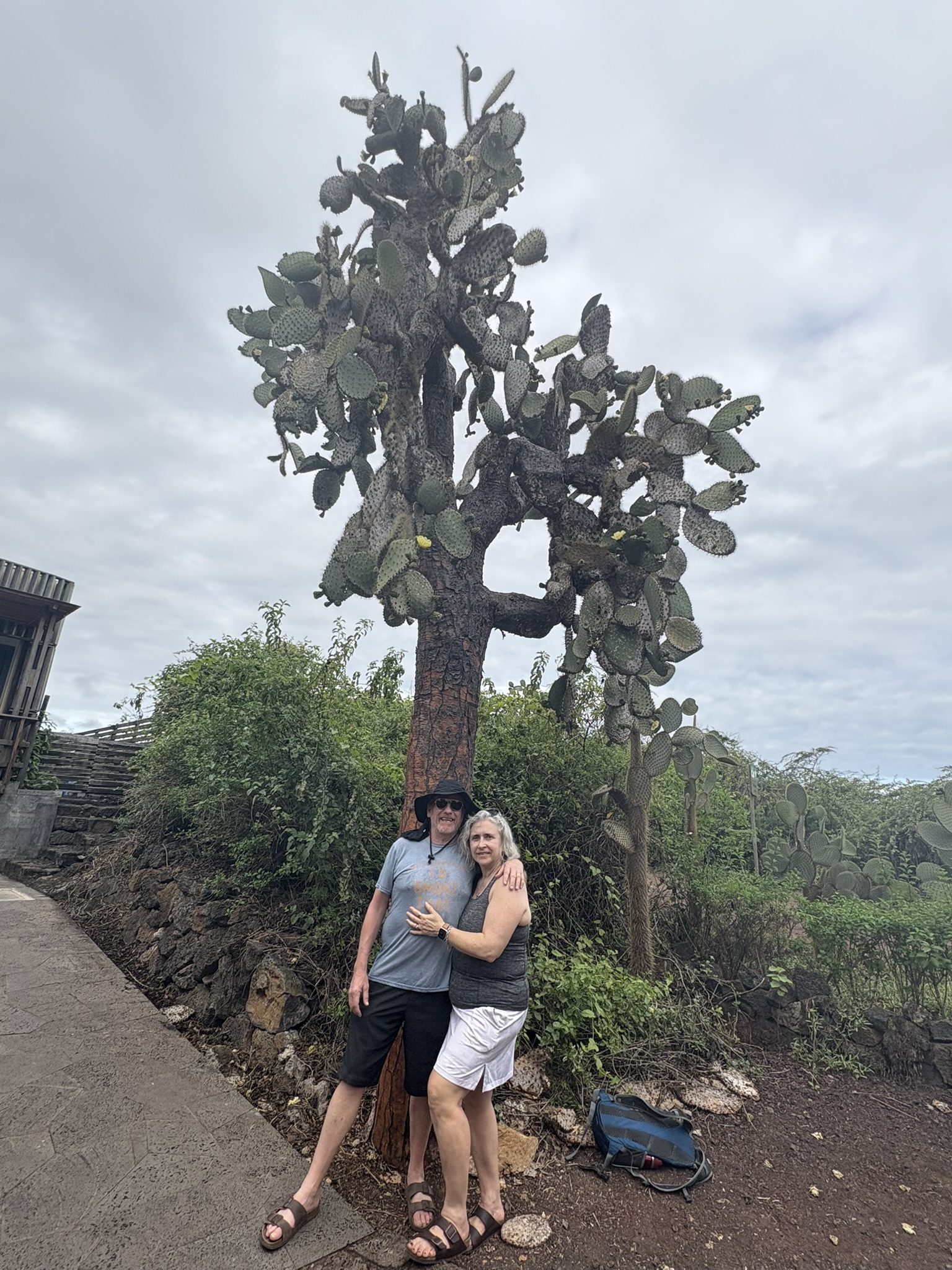
In the afternoon, we are off to the Tortoise breeding center and the Darwin centre with Isabella, our local guide. I am very surprised with the sizes and number of prickly pears cactus, indigenous to the island.
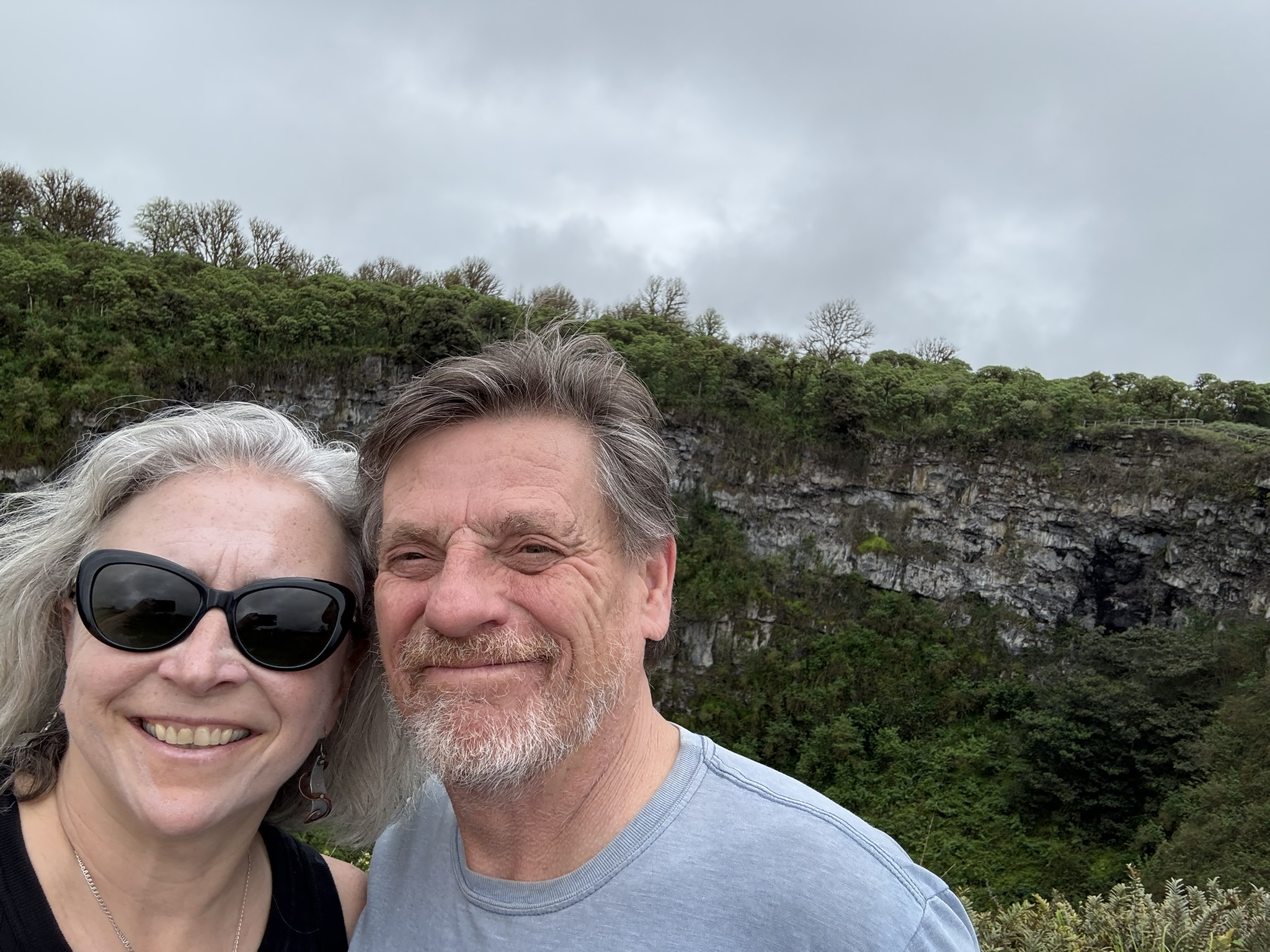
It is so interesting to learn of their efforts to rebuild the turtle population that was depleted to 20,000 across all the Galapagos in 1960, due to pirates and fisherman that were using them for food and then for oil on the mainland. Due to their efforts with incubation and breeding, they now count more than 60,000 tortoise in the islands. There are 15 species but 4 are extinct.
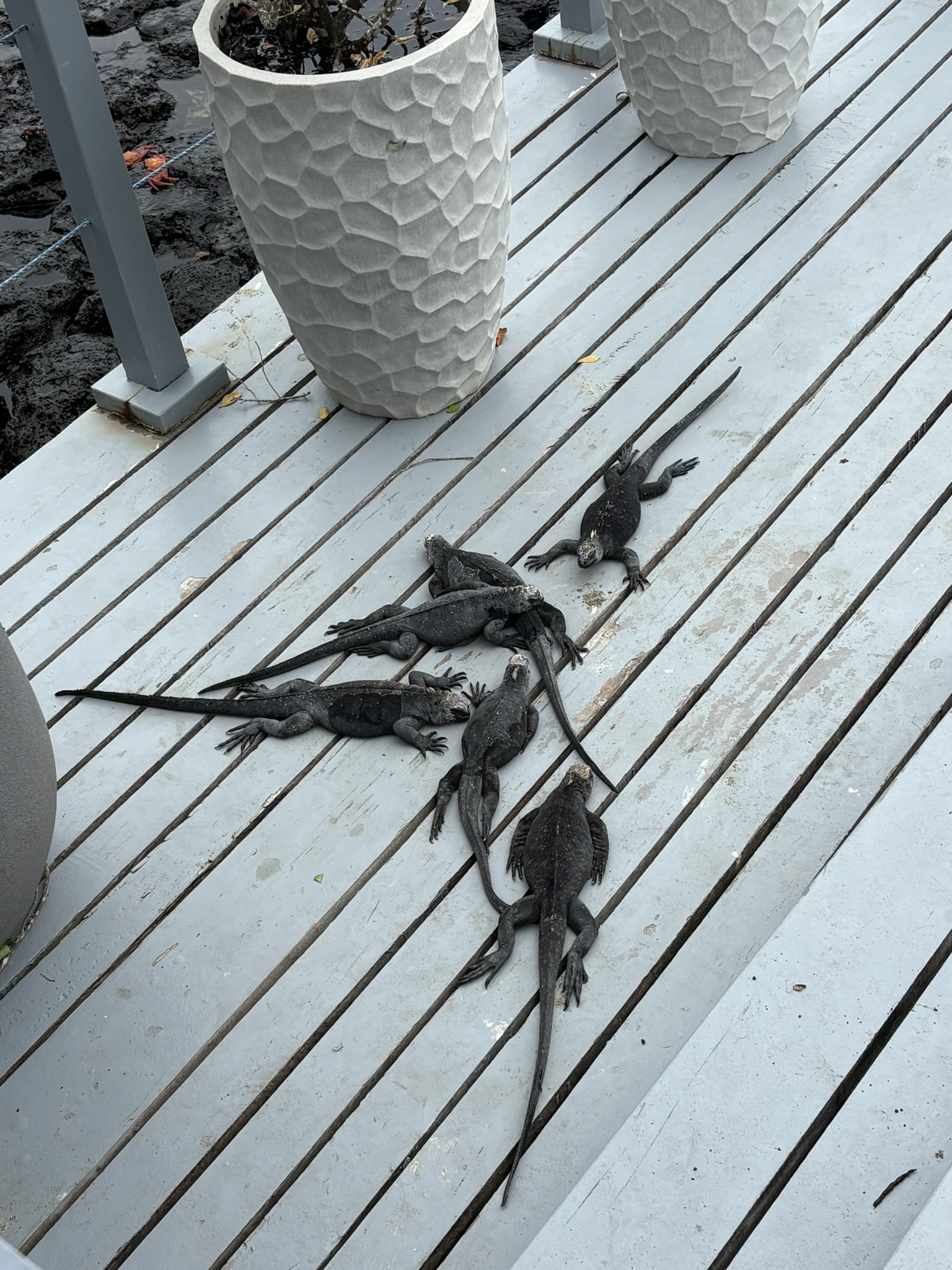
On day 1- our travel agent reserves a table at Bahia Mar for our first day, a lovely restaurant with ocean view. It is delicious and we enjoy watching the many iguanas sunbathing and the red crabs that we will see very often.
For example, they were successful in bringing the only remaining 13 female and 2 males from on if the islands many years ago and breed them to 2000 eggs the first years. They then reintroduce them in the wild once they are 5 years old because at that age, their shells are hard and they no longer have predators. Tortoises reach puberty at 25 years old. At the centre, they only feed the babies 3 times a week so that they continue to find their own food the other days to be better prepared to go back.

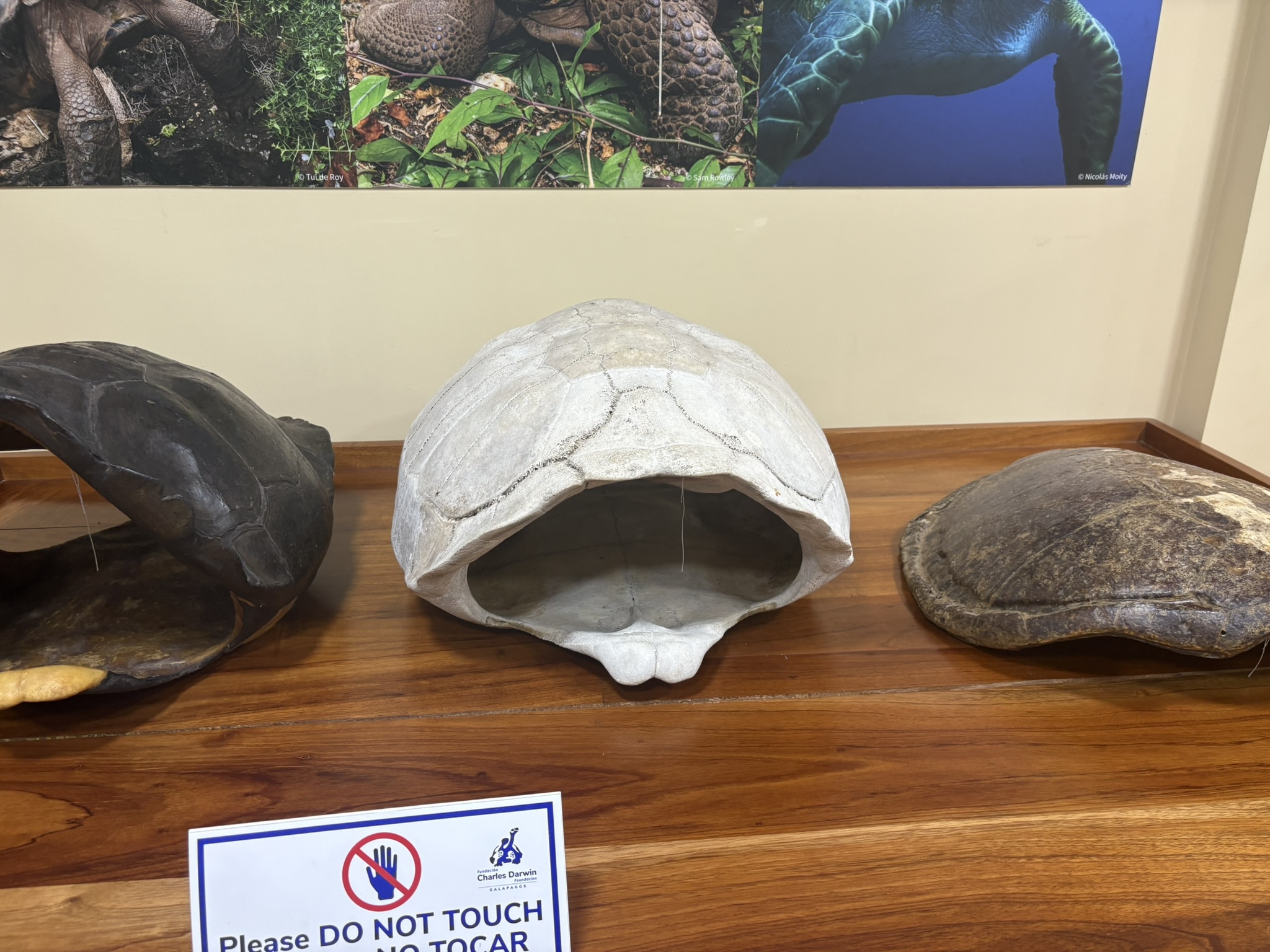
We see small 1 years old babies to 50 years old adults that are here to breed and then go back. We learn about the many small lizards that are critical for the cycle of life here as everything eats them as well as the difference between the shapes of the shells of the tortoise depending if they are marine, low feeding or high feeding (with long neck that do not retract into their shells).
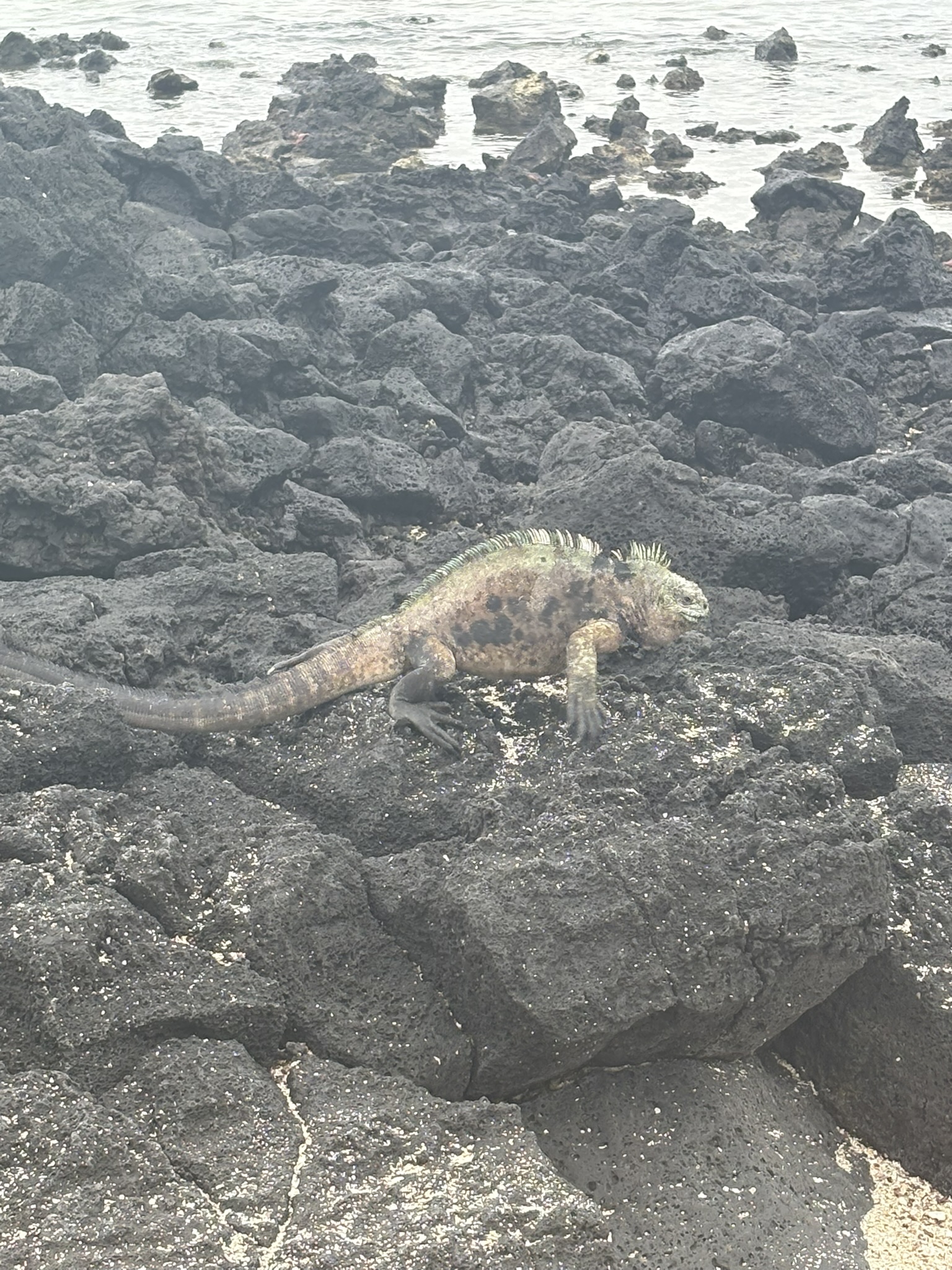
A small local beach near our hotel teeming with life – the iguana leading the way.
Same type of iguana but a male showing off its colors to attract a female.
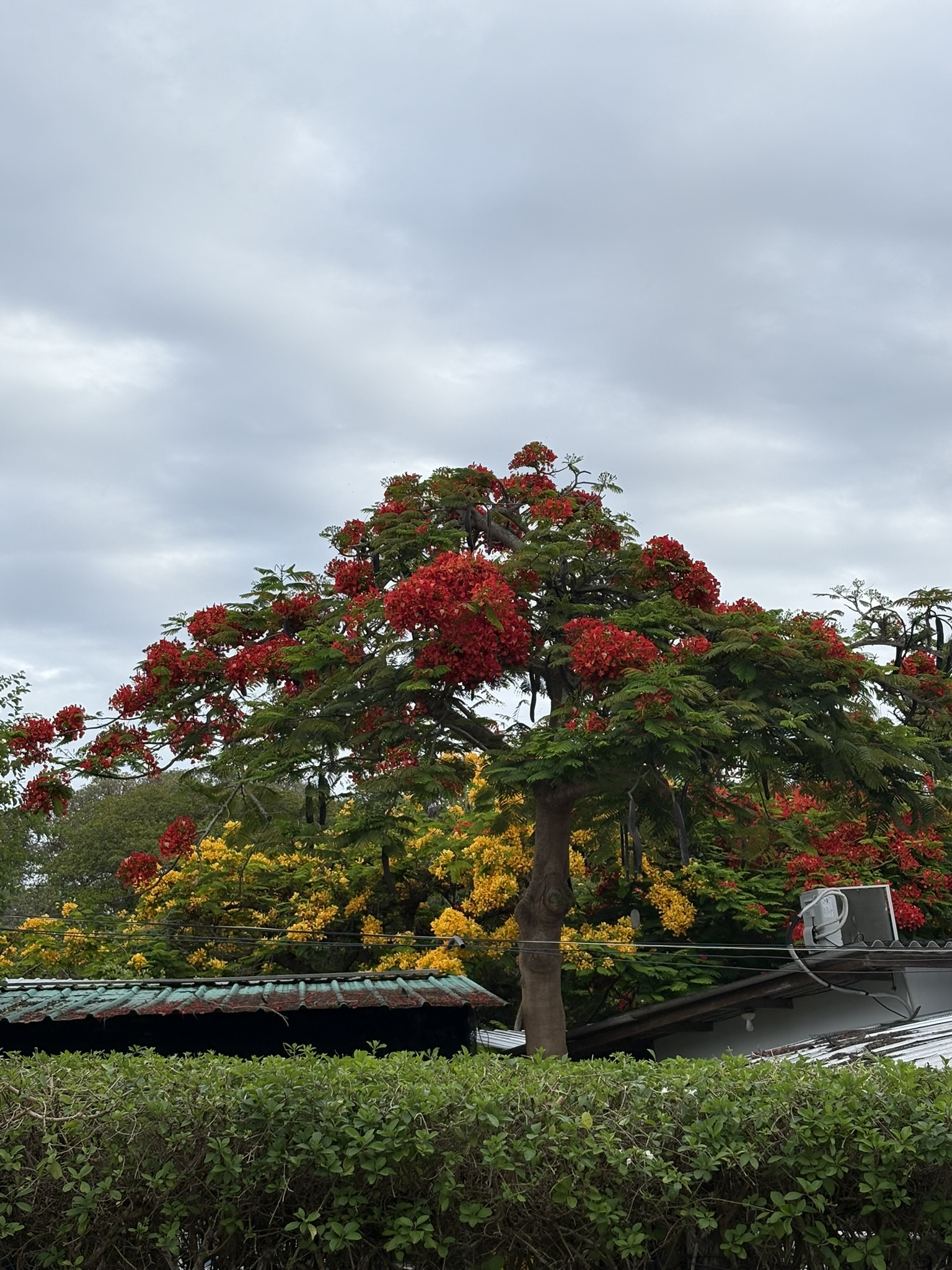
Isabella points out many vegetation including the glorious red and yellow Flamboyant that originates from South Africa but is not invasive. There are beautiful native yellow hibiscus also and the tree that is used to make Panama hats (which are really ecudorian). This tree only grows here. She tells us that the only indigenous flowers here are either yellow or white.
Getting ready for our day trip to Bartolomé and Santiago (hoping to see penguins!)
We board a nice yatch with a small group, including 5 ladies from Iceland who have knows each other for 40 years and have started travelling together. How cool!!
It is a 2 hours cruise and our first stop is bypassing another uninhabitate island to learn about the local sea birds. Here we catch a Frigatebird in flight (known to be able to fly at sea for 2 months). On the way we see many dolphins swimming very near the board as well as turtles, sea lions and one shark. The sea is full of life here.
Arriving at Bartolomé, we disembark and must dislodge a large sea lion sunbathing on the steps. He isn’t happy to be disturbed from his siesta 
Filipe explains that the difference between seals and sea lions is that the sea lions swim but moving their front limbs and using their back shoulder which requires a lot of energy, whereas the seals use their tail which is easier. Therefore sea lions are always exhausted  which is why they are always lounging.
Our guide is super interesting and knowledgeable. I will capture a bit of the info he shares here.
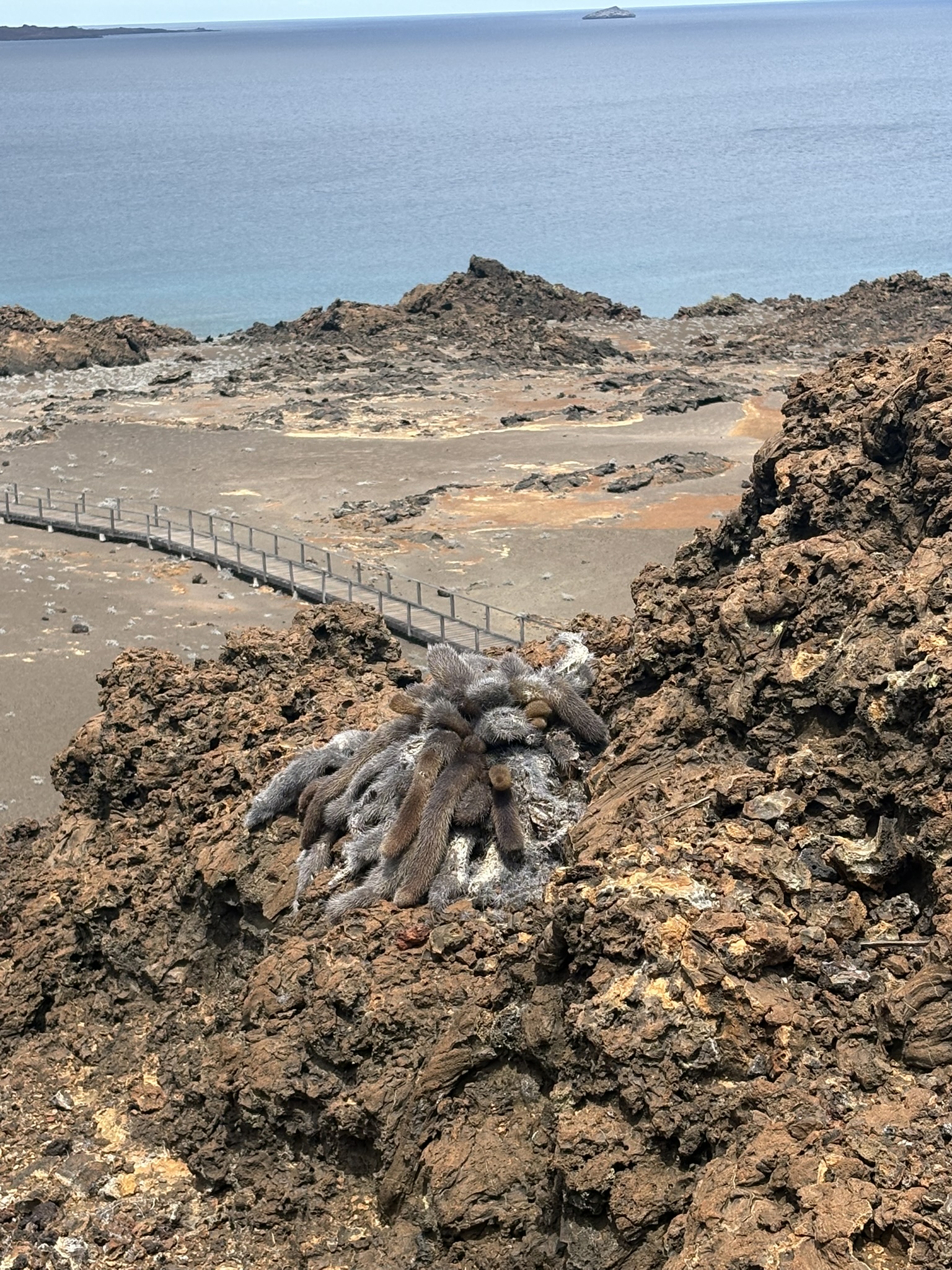
We make our way up to the summit on a path built of wood with flat sections and stairs. Along the way our guide Filipe, tells us about the formation of Volcanoes, and more specifically the Galápagos Islands. We learn that St-Ferdinand is the youngest one at 500,000 years and is the one sitting right on top of the magma chamber. The oldest ones is in straight line to the east at 5 millions years old. In between, we have Isabella where we will go towards the end of the week and Santa Cruz where we are staying now. We learn about “tuff” which is the packed lava we see everywhere and the lava cactus. This cactus is about 100 years old because of its small size but there is a large one on St-Ferdinand that they estimate is 800 years old and is 6 feet wide. As their branch die and decompose on the ground, they create the condition for more vegetation to come.
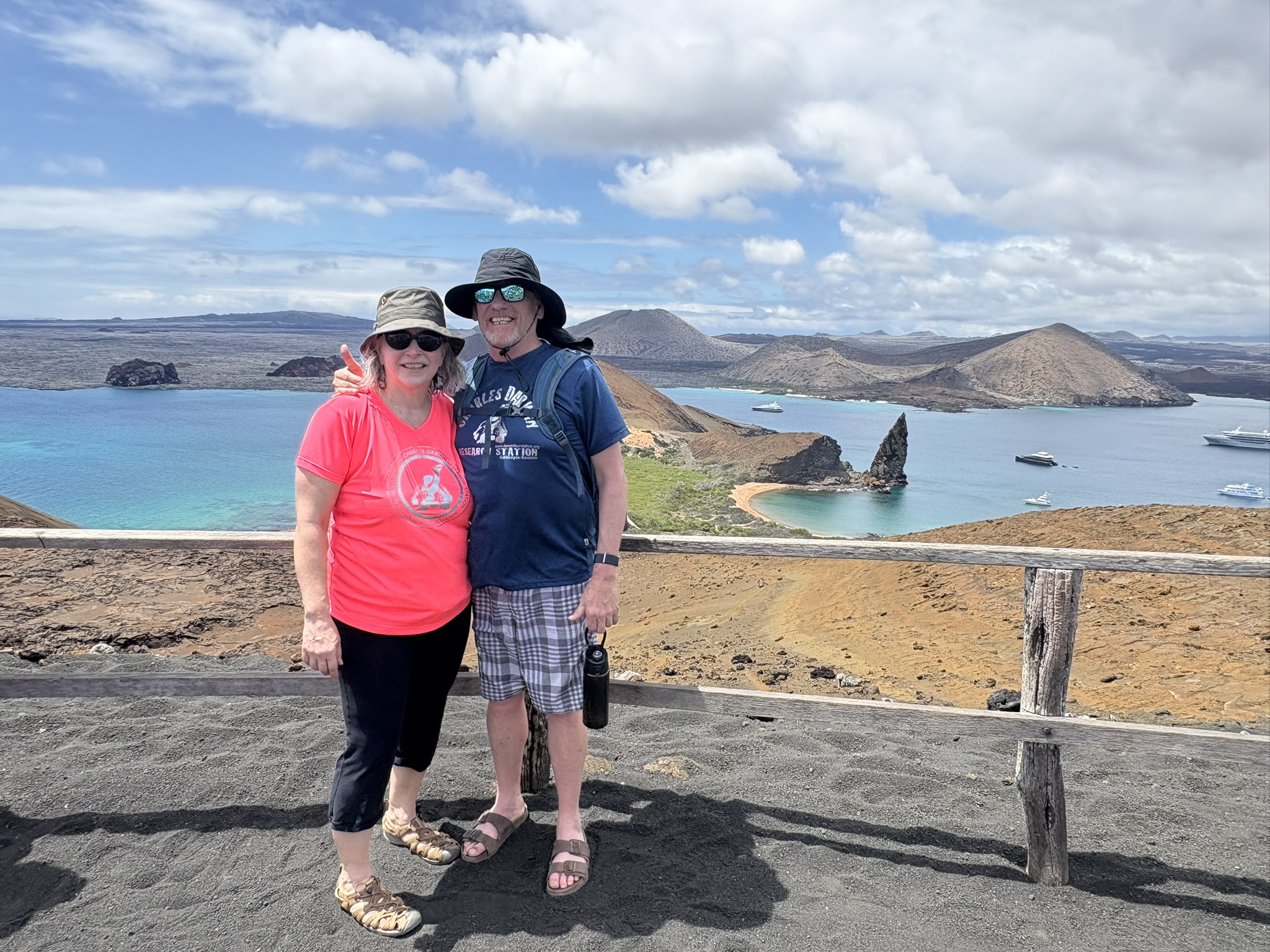
The view at the top is very spectacular, with turquoise water surrounding us and the iconic Bartolomé Pointy rock.
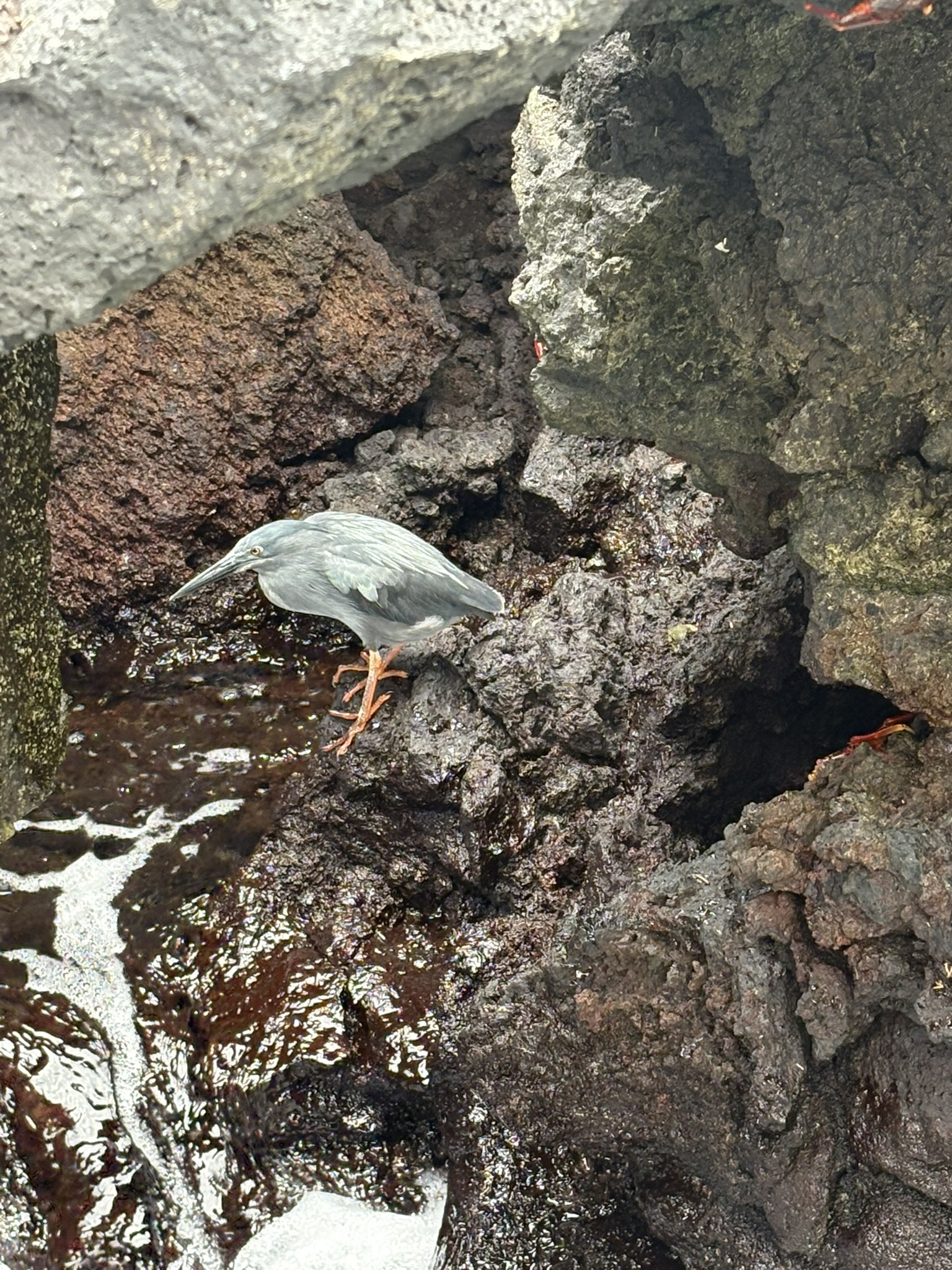
We come back down and discover a lava heron nestled in a hole in the rocks besides the stairs of the dock.
Our sea lion is there swimming around waiting for those darn human to leave so he can get his spot back. As soon as there are only a few left, he makes his way up and there is nothing Filipe can do!
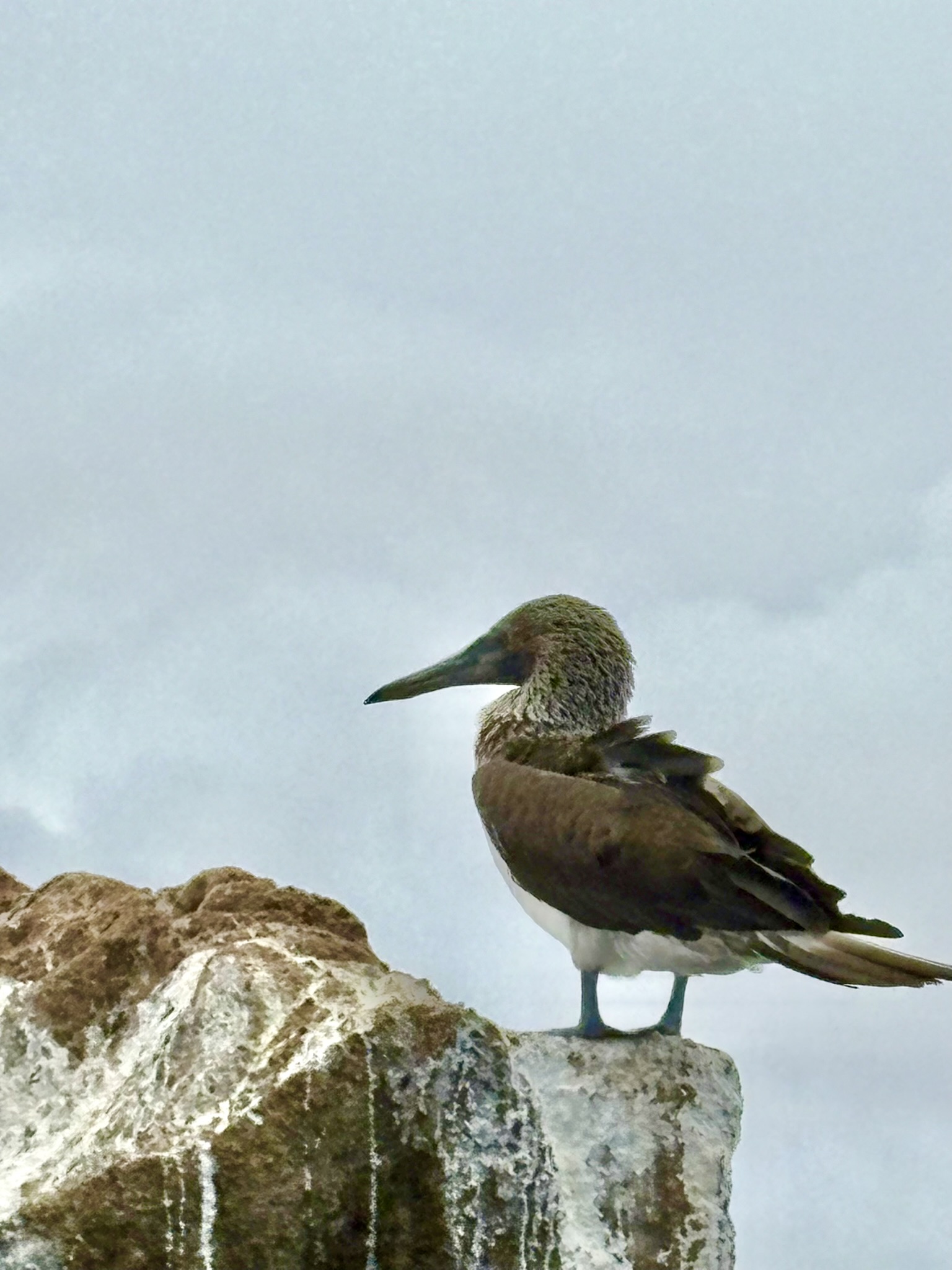
Onwards to the local small penguin resting spot and the white beach in Santiago for snorkelling. on the way we find a blue footed Booby handing out with 2 playing full sea lions.
Once organized with our snorkeling equipment in the water, we are treated to a rainbow of colors – the fishes we see are amazing! Many “Nemo” orange fish as well as blue, yellow, red, purple, green etc…, my favorite being the bluechin parrotfish both make and female. Also urchins and then all of sudden, a PENGUIN swimming right besides us. Maybe 2 arms length from me! So cute and again so oblivious to humans. The one swimming near me with is more brown than black identifying him as a juvenile. What a treat!!
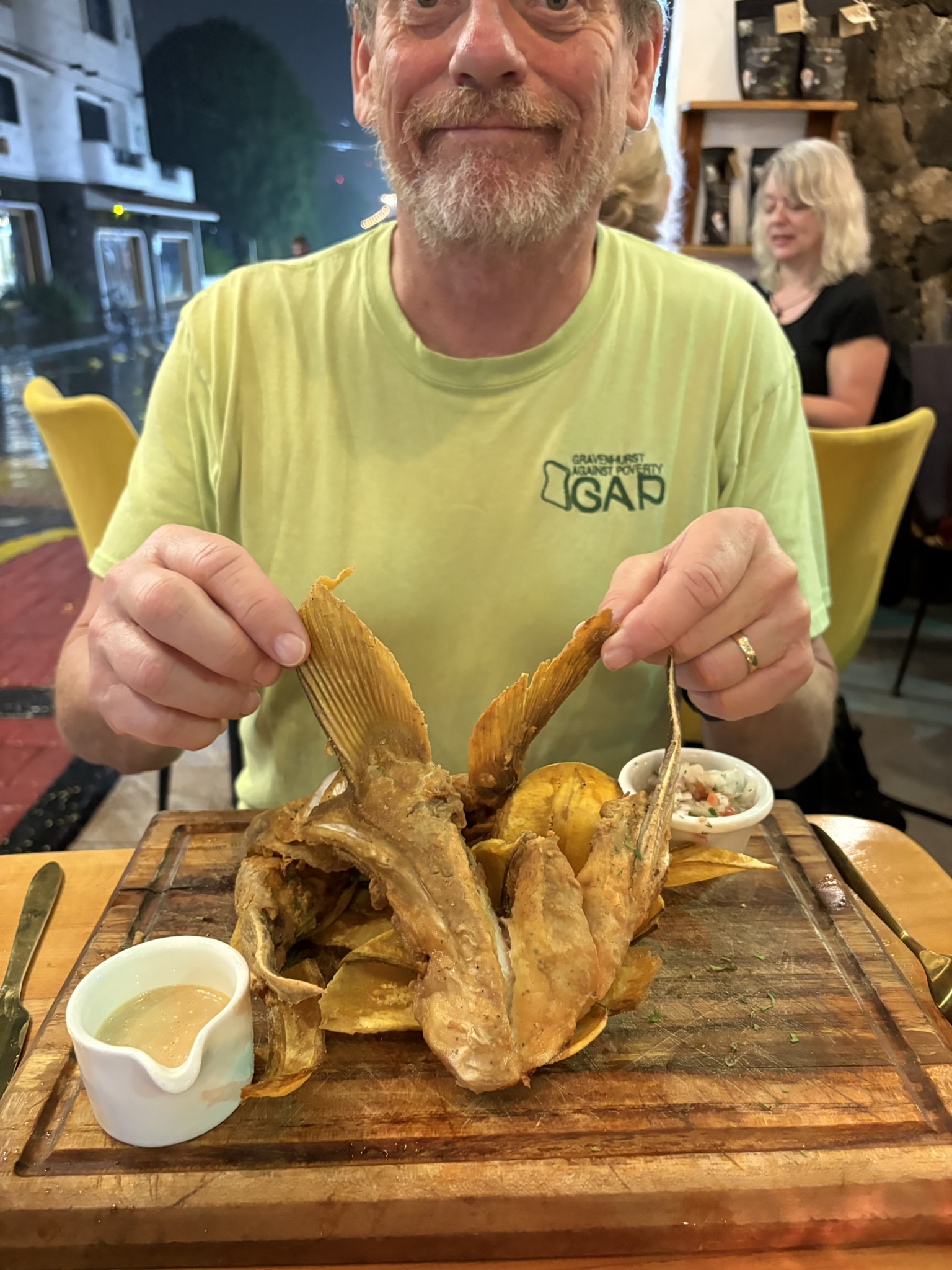
Back in town we walk to an excellent restaurant and Chuck orders a meal of « deep fish sticks ». It is sooo delicious and huge!
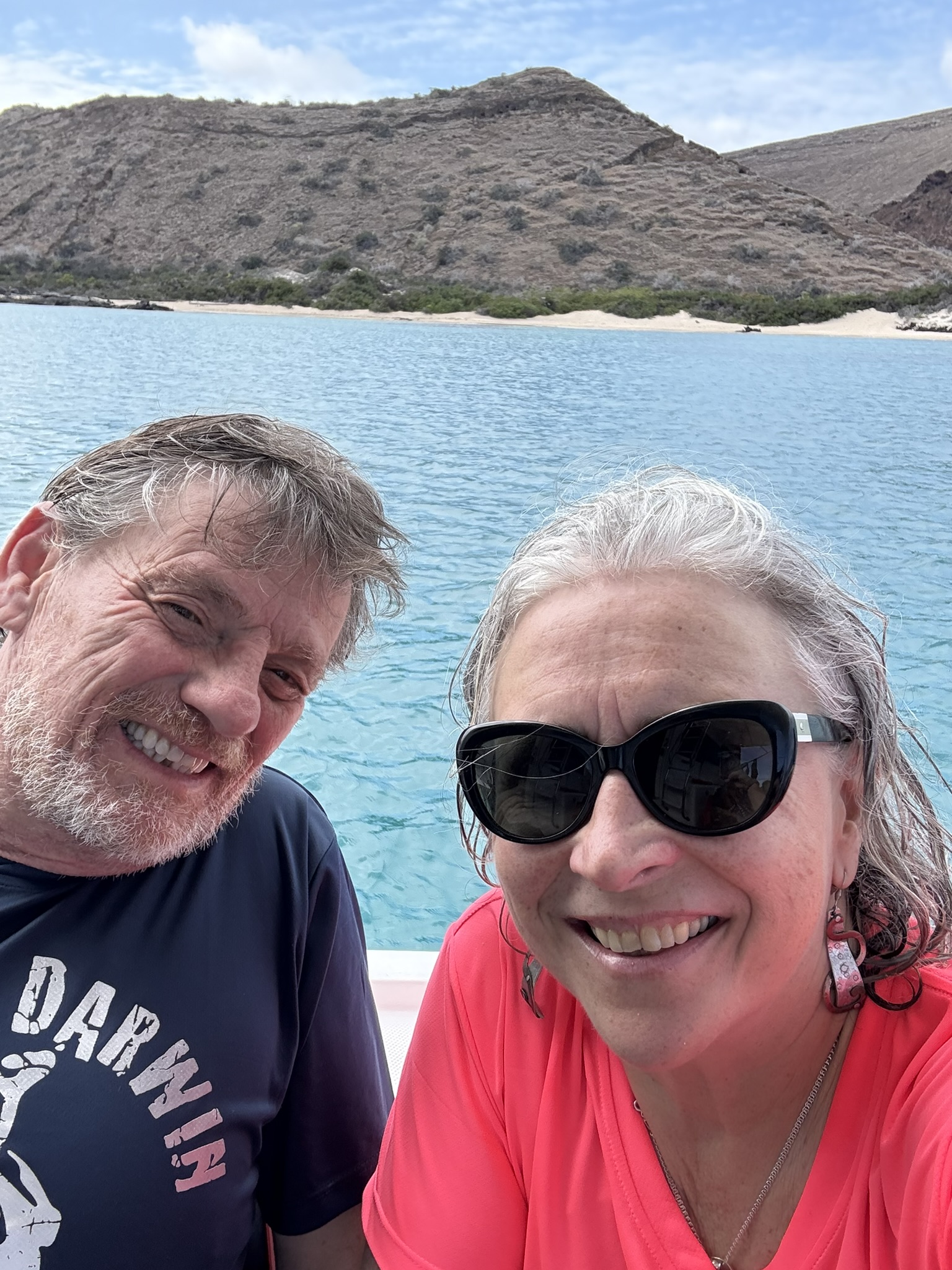
Fabulous first days in Galapagos. Can’t wait for the rest of the week!

Posted on February 8, 2025, in Sacred Valley + Galapagos island 2025, Travels and tagged art, ecuador, galapagos island, photography, sculpture, travel, Travels, trip, video, video. Bookmark the permalink. Leave a comment.
 Martine's food and places
Leave a comment
Comments 0